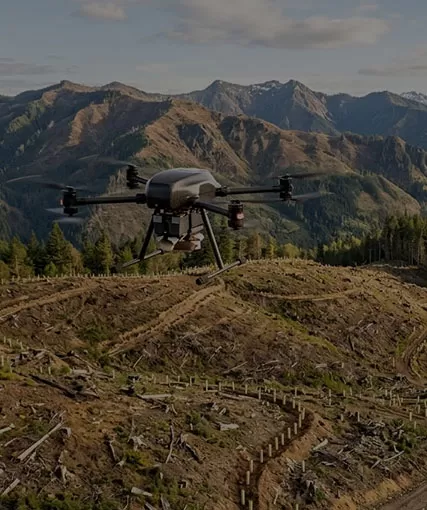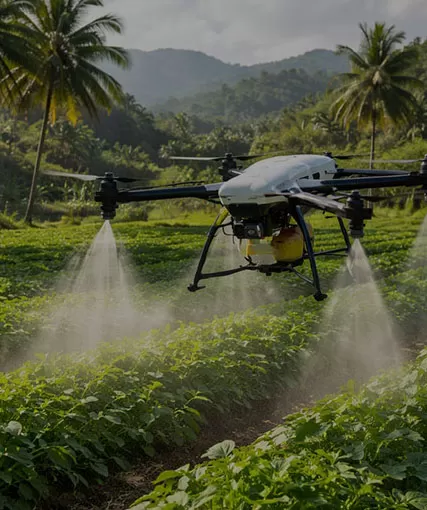
Modern drones are no longer limited to aerial photography. Today's payload drone platforms—especially in the agricultural and industrial sectors—are designed to carry, power, and control a wide range of mission-specific equipment. From precision spraying systems to LiDAR scanners and cargo boxes, payload flexibility has become one of the most important performance metrics for professional operators.
So, can you attach different payloads to DJI drones?
Yes—but only when weight limits, power budgets, and integration methods are properly engineered.
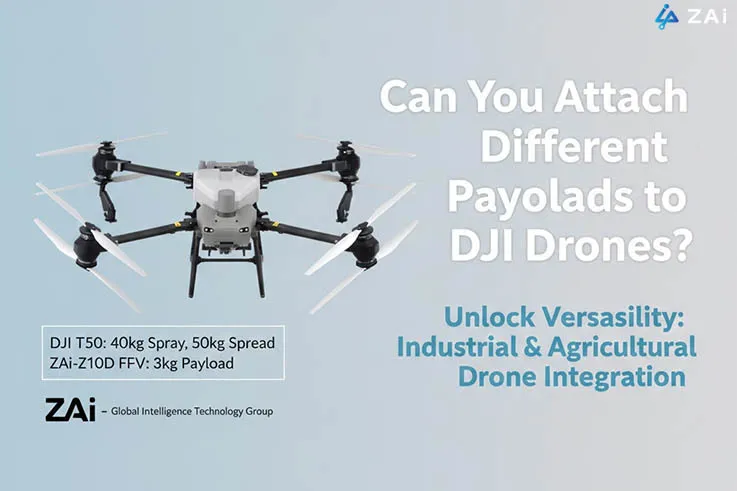
This article explains how payload integration works in practice, using the DJI T50 agricultural drone and the ZAi-Z10D FPV platform as real-world examples.
Early drones were essentially flying camera mounts. Modern industrial drone platforms, however, have evolved into modular airborne workhorses.
Today's professional drones are expected to:
Support multiple payload types
Maintain stable flight under varying weight distributions
Provide standardized data and power interfaces
Allow rapid payload swapping in the field
This transformation has enabled one airframe to serve multiple industries: agriculture, surveying, infrastructure inspection, emergency response, and logistics. In short, a modern payload drone is closer to a configurable aerial robot than a simple aircraft.
HongKong Global Intelligence Technology Group (ZAi) focuses on bridging the gap between standard drone platforms and specialized industrial requirements. By designing custom payload modules, power systems, and integration frameworks, ZAi enables operators to deploy drones in scenarios where off-the-shelf solutions fall short—such as heavy-lift logistics, FPV tactical missions, and industrial sensing.
Yes, attaching different payloads is feasible on DJI drones and compatible platforms, but success depends on:
Weight limits (payload capacity vs. MTOW)
Power requirements (voltage, current draw)
Mounting interfaces (mechanical brackets + electronic interfaces such as DJI SDK / PSDK)
Ignoring any of these factors can result in flight instability, reduced battery life, or even mid-air failure.
Two numbers define what a drone can safely carry:
MTOW (Maximum Takeoff Weight)
The total mass of the drone, batteries, payload, and accessories.
Payload capacity
The portion of MTOW available for mission equipment.
Payload capacity = MTOW – (airframe + motors + batteries + avionics + landing gear)
Exceeding this limit stresses motors, ESCs, and batteries, shortens component life, and increases crash risk.
The DJI T50 is a benchmark agricultural drone designed for high-throughput farm operations.
Operators can rapidly switch between:
Liquid spraying tanks
Granular spreading systems
This allows one aircraft to handle fertilization, pesticide application, and seeding tasks.
Spraying capacity: 40 kg
Spreading capacity: 50 kg
The difference exists because granular loads distribute mass closer to the drone's center of gravity and impose less sloshing inertia than liquid tanks.
The flight controller dynamically compensates for:
Changing weight
Shifting center of mass
Different aerodynamic drag profiles
This is essential for maintaining altitude control and navigation accuracy.
To maximize battery life and stability:
Operate at 70–85% of maximum payload for routine missions
Keep the payload centered along the vertical thrust axis
Avoid uneven left/right distribution
Reduce payload slightly in high-temperature or high-altitude environments
These adjustments can extend flight time by 15–25% while reducing motor temperatures.
In industrial applications, payloads often include:
LiDAR scanners (3D mapping, terrain modeling)
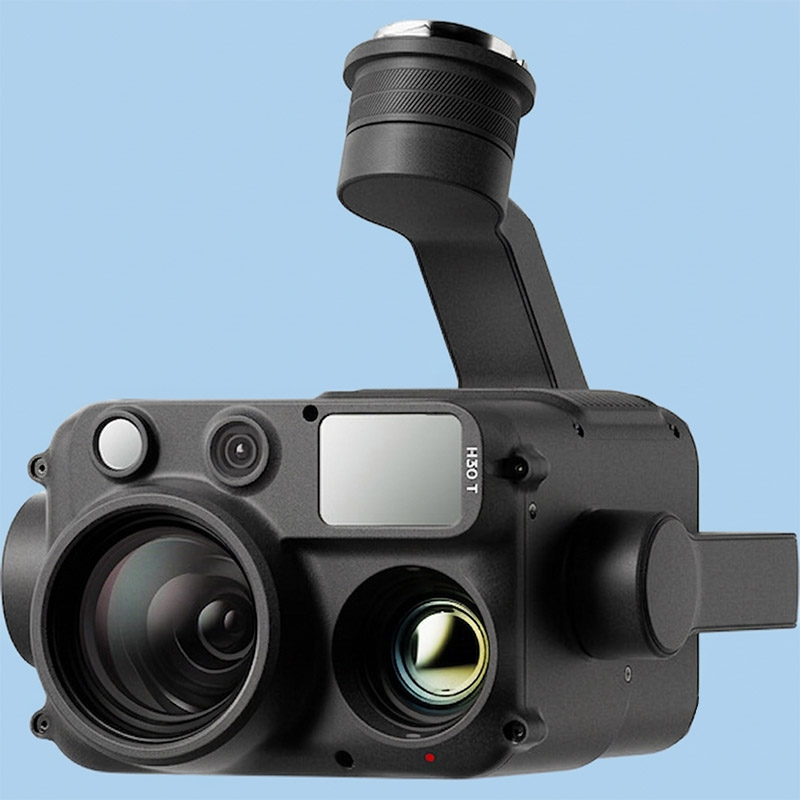
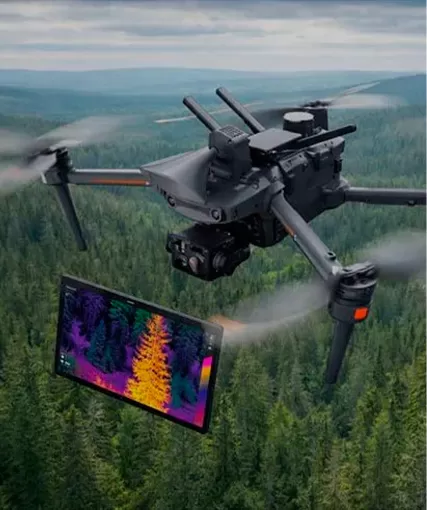
Thermal cameras (power line and solar inspection)
Multispectral sensors (crop health analysis)
Gas detectors (chemical plants, mines)
These turn a drone into a mobile data-collection platform.
Heavy-lift drones are increasingly used for:
Medical supply delivery
Offshore transport
Mountain logistics
Warehouse-to-warehouse transfer
Custom payloads typically include:
Motorized winches
Smart cargo boxes
Shock-absorbing suspension frames
Here, cargo drone weight limits are the defining constraint. Every kilogram of cargo reduces:
Flight time
Wind resistance margin
Emergency maneuvering capability
DJI's Payload Software Development Kit (PSDK) allows third-party manufacturers to create modules that:
Communicate directly with the flight controller
Receive power from the drone
Appear as native devices in DJI software
Companies like ZAi use this framework to deliver plug-and-play sensors and tools that behave like original DJI accessories, minimizing integration risk and pilot workload.
This process—often called drone payload integration—is what enables industrial customization at scale.
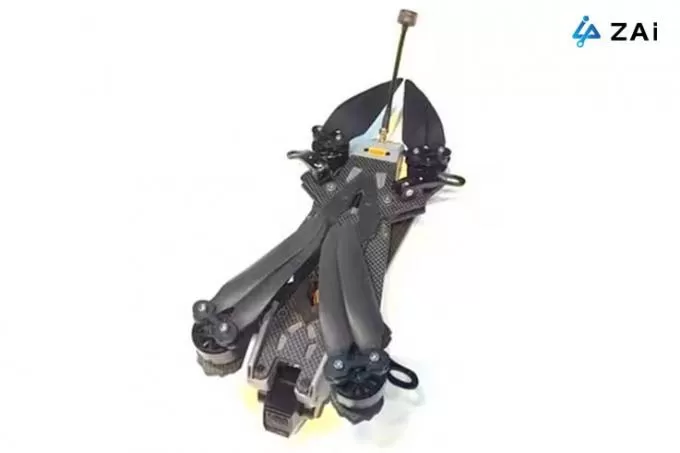
The ZAi-Z10D is a high-performance FPV platform designed for:
Rapid inspection
Confined-space navigation
Tactical observation
Emergency reconnaissance
Unlike agricultural drones, its priority is speed and maneuverability.
Carrying 3 kg on a 10-inch FPV drone is technically significant.
It allows integration of:
Advanced optical systems
Specialized transmitters
Compact sensor arrays
Mission-specific equipment
without sacrificing operational usability.
ZAi achieves this by optimizing:
Motor thrust-to-weight ratio
Propeller efficiency
Battery discharge rate
Carbon-fiber frame rigidity
Even at maximum load, the ZAi-Z10D maintains the tight turning radius and rapid throttle response required for true First Person View operations in dense environments.
Poor placement is more dangerous than excessive weight.
Keep payload aligned with the geometric center
Avoid forward or lateral bias
Use vibration-damping mounts when possible
A misaligned CoG forces constant motor compensation and destabilizes autonomous flight modes.
Payloads draw energy for:
Sensors
Gimbals
Transmitters
Mechanical actuators
This reduces usable flight time and increases battery temperature. Always account for continuous current draw, not just peak values.
Large or box-shaped payloads:
Increase drag
Trap heat around motors
Reduce maximum safe wind speed
Streamlined enclosures can recover 10–15% efficiency.
Poorly shielded electronics can disrupt:
GPS reception
Compass calibration
DJI O3 video transmission
Always test EMI levels before operational deployment.
Whether you operate a DJI T50 for precision agriculture or a ZAi-Z10D for specialized FPV missions, payload flexibility directly determines your return on investment.
Agricultural users gain seasonal adaptability.
Industrial operators gain multi-sensor capability.
Logistics teams gain airborne delivery options.
However, safe and efficient payload deployment requires professional system design—not trial and error.
For complex missions involving heavy cargo drones or advanced industrial payloads, working with specialized manufacturers like ZAi ensures:
Regulatory compliance
Structural safety
Power system compatibility
Long-term reliability
In modern drone operations, the aircraft is only half the system. The payload is where real mission value is created.
 English
 français
 Deutsch
 русский
 فارسی
فارسی ไทย
ไทย العربية
 Nederland
 বাঙালি
 Македонија