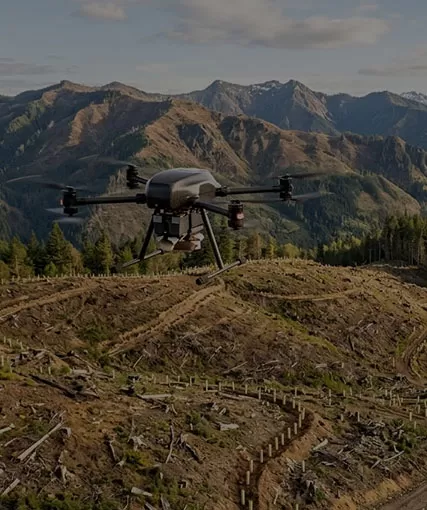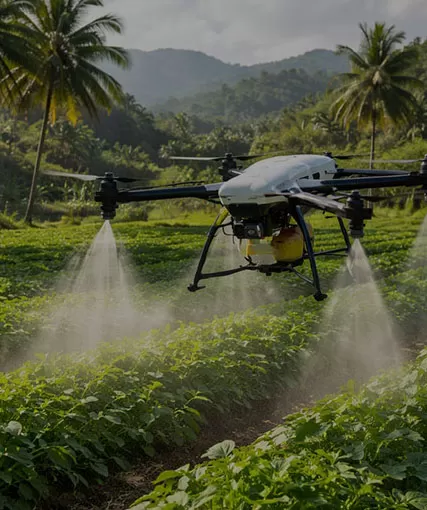
Detecting nearby drones is becoming increasingly important for homeowners, businesses, and security professionals. With drones becoming more powerful and accessible, so too are the tools for identifying them in the sky. Today, detection ranges from simple smartphone apps to advanced, multi-sensor security systems used in critical infrastructure, airports, and government facilities.
This guide explains the most effective methods available—from free, accessible options to professional-grade solutions—so you can understand what works, what doesn't, and how to choose the right tools for your needs.
For everyday users, the most accessible way to detect drones relies on the signals that many drones already transmit. These methods don't require special hardware and can often be used with a standard smartphone.
In regions with strict aviation rules—such as the United States and the European Union—most modern drones are required to broadcast Remote ID. Remote ID works like a digital license plate, periodically transmitting identification and flight data using Wi-Fi or Bluetooth protocols. These signals can include:
Drone ID
Drone location and altitude
Drone speed
Drone heading
Takeoff point
Sometimes even the pilot's location
Free mobile apps, such as Drone Scanner, AirSentinel Mobile, and others, can receive these broadcast signals. They essentially turn your phone into a simple drone-radar interface. Once the app detects a compliant drone, you may see its:
Real-time position on a map
Distance from you
Altitude
Identification details
This is one of the easiest ways for the general public to detect drones without investing in professional equipment.
While useful, Remote ID apps have several inherent limitations:
Only detects drones that are Remote-ID compliant and actively broadcasting. Unregistered, hacked, or modified drones may not transmit anything at all.
Range is limited—typically between 1,000 to 5,000 feet depending on the phone's Wi-Fi/Bluetooth sensitivity.
Cannot detect autonomous aircraft that do not use a controller or radio link.
For general curiosity or basic situational awareness, Remote ID apps are sufficient. However, for security, privacy protection, or facility defense, more advanced technologies are required.
For high-security environments—airports, power stations, correctional facilities, event venues, military sites, or large private properties—commercial detection systems use multiple advanced sensors working together.
These systems aim to detect all kinds of drones, including:
Remote-controlled drones
Autonomous drones on pre-programmed routes
Modified drones with disabled communication systems
Non-compliant drones without Remote ID
Below are the four most common technologies used in professional drone detection systems.
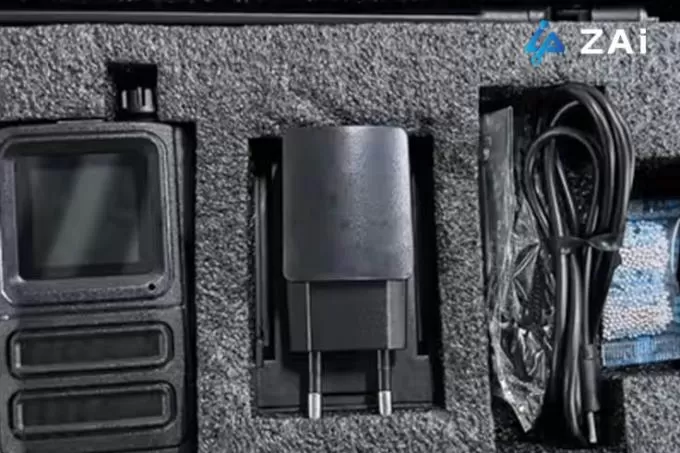
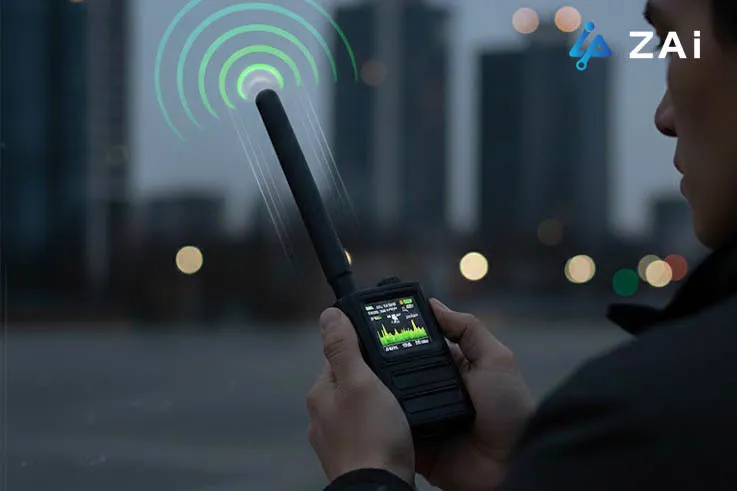
RF detection systems passively monitor the radio spectrum used by drones and their remote controllers. Every drone uses some form of communication link—whether Wi-Fi, proprietary RF, or frequency-hopping protocols—to maintain contact with the pilot. RF sensors analyze this traffic, identify the specific drone model, and triangulate its location.
Some professional devices, such as the ZAi-10S drone detector provided by HongKong Global Intelligence Technology Group Limited, specialize in high-precision RF analysis.
Locates both the drone and the pilot. This makes RF detection one of the most powerful security tools available.
Identifies non-compliant drones that do not broadcast Remote ID.
Works passively, meaning it does not emit signals and is difficult to detect or jam.
Directional RF sensors allow for highly accurate location triangulation.
Best suited for:
Security teams, commercial facilities, law enforcement, and organizations needing to track both approaching drones and the pilots behind them.
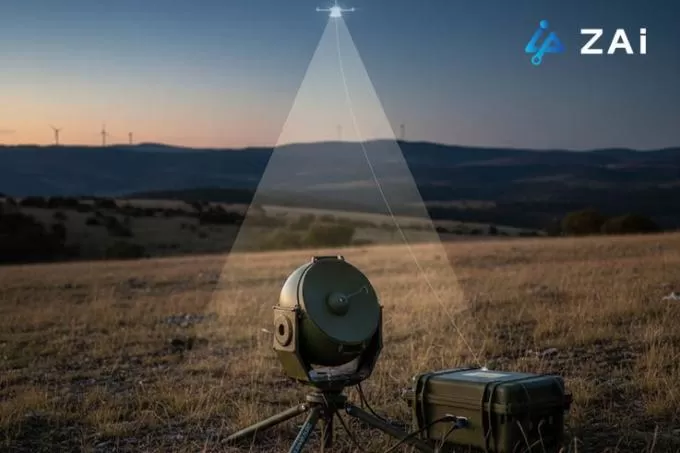
Radar systems emit radio waves that bounce off airborne objects. By analyzing the returning signal, radar can detect movement, distance, and speed. Specialized micro-Doppler radars are particularly valuable for drone detection because they can distinguish the tiny rotational speed variations produced by drone propellers.
Long-range detection, often several kilometers depending on the radar power.
Works in all weather—fog, rain, snow, or night conditions do not impact radar performance.
Detects autonomous drones that are not emitting RF or Remote ID signals.
Some hostile drones fly without radio transmissions to avoid RF detection. Radar is one of the only technologies that can find these stealthy, autonomous aircraft.
Acoustic detection uses arrays of sensitive microphones to identify the unique sound signature of drone engines and propellers. Each drone model has slightly different rotor patterns and noise levels, allowing the system to recognize and classify the source.
Useful in environments where RF noise is high or radio-jamming is possible.
Provides directional information to help locate the drone.
Shorter detection ranges—usually within 1 km.
Strong wind, heavy traffic, or loud environments can interfere with accuracy.
Acoustic sensors are usually used as one layer of a larger multi-sensor system.
High-resolution optical cameras—including PTZ (Pan-Tilt-Zoom) cameras—work alongside radar or RF sensors. Once a drone is detected, the camera automatically focuses on the drone's coordinates. Infrared or thermal cameras can be used for nighttime or low-visibility detection.
Provides visual confirmation, which is crucial for identifying:
Drone model
Payload
Flight behavior
Potential threats
Useful for forensic documentation and evidence collection.
Dependent on line-of-sight.
Performance may decrease in fog, heavy rain, or low-light environments.
Optical tracking is typically the final verification step in a security system.
Professional drone detection solutions combine two or more of the technologies above. This approach—called sensor fusion—dramatically improves accuracy while minimizing false alerts. For example:
Radar detects an object → RF sensor identifies it as a drone → Camera confirms visually.
RF detects a drone's signal → Acoustic and optical sensors track it in cluttered areas.
Multi-sensor systems are the gold standard for serious security applications.
Whether you are a homeowner trying to understand what's flying over your property or a security professional responsible for protecting critical infrastructure, choosing the right drone detection method depends on your required range, budget, and level of security.
For individuals, Remote ID apps are often enough.
For organizations, airports, and security-sensitive facilities, professionally engineered multi-sensor systems are essential.
If you are considering purchasing drone-detection equipment, industrial drones, or customizing drone-related technologies, feel free to reach out to the specialists at Hong Kong Global Intelligence Technology Group Limited. Their expertise covers professional RF detectors, advanced drone solutions, and high-end security technologies tailored to different operational needs.

 English
 français
 Deutsch
 русский
 فارسی
فارسی ไทย
ไทย العربية
 Nederland
 বাঙালি
 Македонија