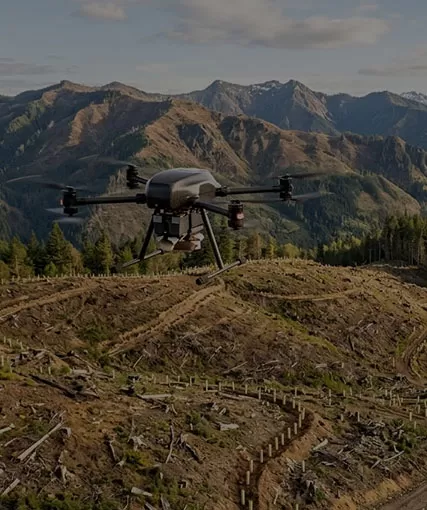
Cargo drones can shorten selected transport routes, improve access to difficult locations, and reduce dependence on slow ground transfers, but an aircraft purchase alone does not create a workable logistics system. A successful program connects the aircraft, payload container, launch and recovery sites, communications, operators, maintenance, regulatory pathway, and business process into one controlled operation. That is why the most effective buyers begin with a route and service requirement rather than a preferred airframe.
This playbook is written for industrial companies, logistics operators, engineering contractors, emergency-response organizations, utilities, mining sites, island supply networks, and distributors evaluating unmanned cargo transport. It follows a stage-gate structure so that you can stop weak concepts early, validate the most uncertain assumptions, and scale only after operational evidence supports the decision. The aim is not to claim that drones replace trucks, boats, or helicopters in every scenario. The aim is to identify routes where unmanned aircraft can deliver measurable value within acceptable safety, regulatory, and operating constraints.
ZAi is the drone brand of HongKong Global Intelligence Technology Group Limited. The company presents its offering around application-driven drone systems, configurable payload integration, and deployment support. For a cargo project, that approach matters because payload mass is only one design input. Volume, center of gravity, environmental exposure, loading frequency, route profile, communications, and ground handling can be equally important.
A cargo drone business case is a quantified explanation of which logistics problem the aircraft will solve, who will use the service, what performance is required, and how success will be measured.Begin with the current transport process. Document origin, destination, road or water distance, actual travel time, frequency, cargo type, cost per trip, delay causes, staffing, safety exposure, and consequences of a missed delivery. The strongest candidate routes usually have one or more structural disadvantages: difficult terrain, seasonal road closure, long detours, urgent low-volume items, hazardous access, dispersed sites, or high labor requirements for a small payload.
Do not compare a drone only with the fuel cost of a vehicle. Build a complete baseline that includes driver time, waiting time, vehicle availability, road permits, escort requirements, inventory held at remote sites, failed-delivery costs, and operational downtime caused by missing parts. A maintenance component weighing only a few kilograms may have a high business value if its late arrival stops a production line or leaves a field team idle.
A practical business-case statement should be precise. For example: “Move up to 5 kg of maintenance parts between the central warehouse and Site B, 18 km away, within 35 minutes, at least four times per working day, while reducing emergency vehicle dispatches.” This is more useful than “Use drones to improve logistics” because it establishes payload, route, time, frequency, and intended benefit.
At the first gate, reject routes that have weak demand, no meaningful time or access advantage, unsuitable cargo, or no internal process owner. Continue only when there is a clear operational problem and a decision-maker willing to own the pilot.
An operational design envelope is the set of route, altitude, weather, communications, payload, and ground-site conditions within which the cargo mission is intended to operate.Map the route in three dimensions rather than relying on straight-line distance. Record terrain elevation, buildings, power lines, restricted areas, public roads, water crossings, potential emergency landing zones, radio-shadow areas, and sensitive locations. Add the approach and departure paths at both ends. A 20 km straight-line route can require more energy and operational complexity than a longer route if it crosses steep terrain, dense development, or difficult communications zones.
Separate normal conditions from limiting conditions. Normal conditions define the expected operating day; limiting conditions define when the mission must be delayed, rerouted, or cancelled. Relevant variables include sustained wind, gusts, temperature, precipitation, visibility, icing risk, dust, salt exposure, and electromagnetic interference. Published aircraft ratings should be treated as boundaries to verify, not as a promise that every payload and route can be flown at the limit.
For each direction, calculate loaded and unloaded legs separately. A vehicle may carry maximum payload outbound and return empty, or carry different loads both ways. The energy reserve must account for the more demanding leg, expected headwind, climb, hover or loiter time, contingency diversion, battery aging, and thermal conditions. A route that works in calm commissioning tests may not meet service reliability targets during the worst operating month.
Define communications requirements at this stage. Decide whether the concept assumes visual line of sight, extended visual line of sight, or another operating model that may require additional authorization. Determine which command-and-control links, telemetry, cellular coverage, or redundant communications are available along the route. The Federal Aviation Administration states that routine Part 107 operations generally involve aircraft under 55 pounds, visual line of sight, and operation at or below 400 feet above ground level, subject to the applicable rules and authorizations. Local rules differ, so regulatory analysis must be route-specific.
A regulatory pathway is the set of approvals, operating limitations, personnel qualifications, aircraft requirements, and risk controls needed to conduct the proposed cargo operation legally.Regulatory feasibility should be assessed before a large equipment order. In the United States, the FAA explains that package delivery under Part 107 can be permissible when the combined weight of the aircraft and payload is under 55 pounds, the operation remains within visual line of sight, the external load is securely attached, and the transport is wholly within one state, among other applicable requirements. Operations outside routine limits may require waivers, exemptions, or a different certification pathway.
In Europe, the Specific Operations Risk Assessment, or SORA, provides a structured method for evaluating risk in operations that fall within the “specific” category. The process considers ground risk, air risk, mitigations, operational safety objectives, and evidence. Even when a buyer operates elsewhere, the logic is useful: define the exact concept of operations, identify hazards, specify mitigations, and demonstrate that people, equipment, and procedures satisfy the required level of assurance.
Create a regulatory workstream with named responsibility. Its outputs should include the concept of operations, route maps, aircraft and payload details, operating manual, emergency-response plan, maintenance program, training requirements, communications architecture, recordkeeping method, and evidence needed for approval. Avoid assuming that a supplier’s general product certificate automatically authorizes a particular flight operation.
At this gate, classify the route as: feasible under existing routine rules; feasible with a realistic authorization process; feasible only after substantial infrastructure or procedural changes; or currently unsuitable. This classification protects the project from investing in an aircraft that cannot be used as intended.
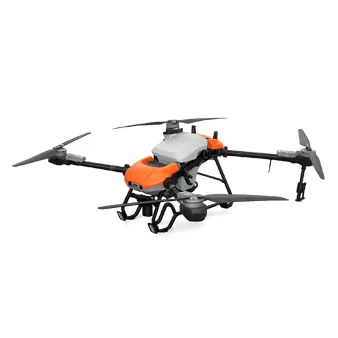
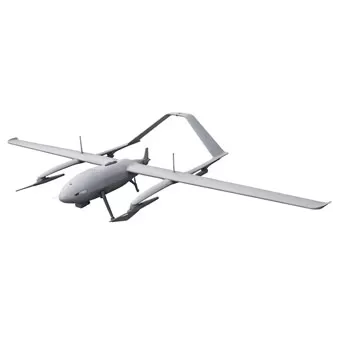
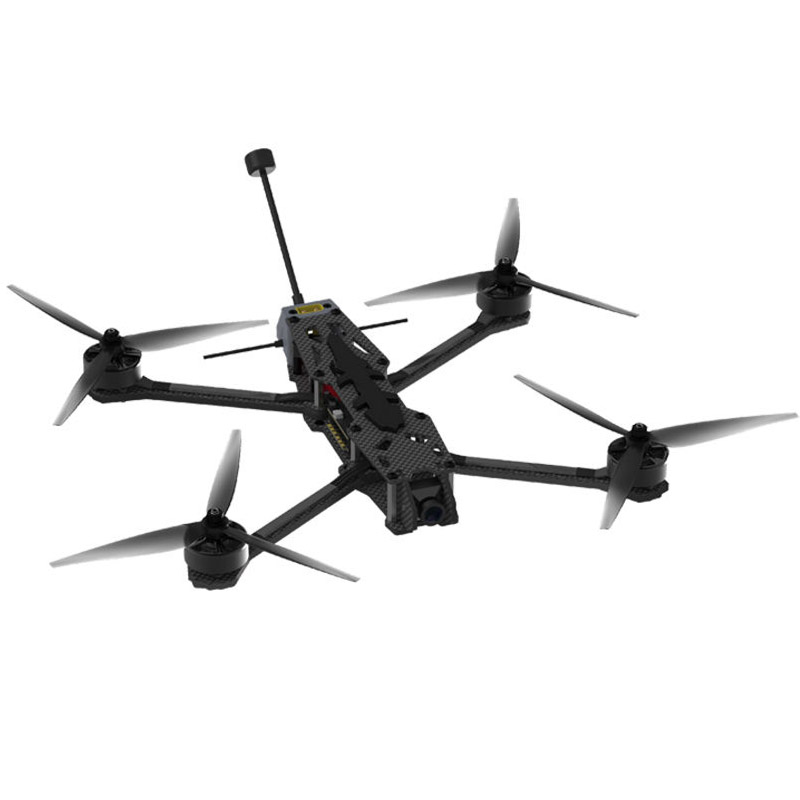
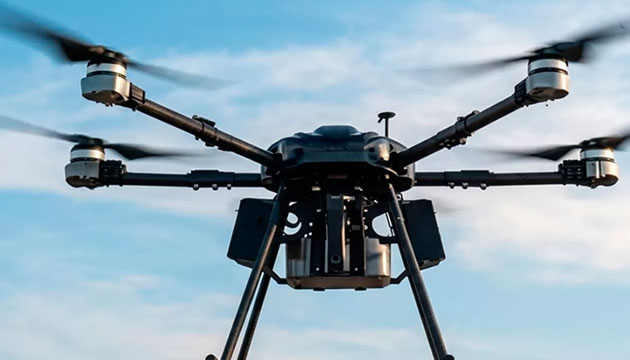
Aircraft architecture is the physical flight configuration—such as multirotor, fixed-wing, or vertical-takeoff-and-landing fixed-wing—that determines how the vehicle launches, carries load, uses energy, and lands.Multirotors are attractive for short routes, constrained sites, hover tasks, and precise vertical pickup or delivery. They usually require less ground infrastructure than conventional fixed-wing aircraft, but hover consumes substantial energy and can limit range. Fixed-wing aircraft are generally more energy-efficient in cruise and may suit longer corridors, but they need an appropriate launch and recovery solution and cannot hover. Hybrid vertical-takeoff-and-landing fixed-wing platforms combine vertical launch with efficient forward flight, but add mechanical, control, and maintenance complexity.
| Architecture | Best-Fit Route | Main Strength | Primary Constraint | Questions to Validate |
|---|---|---|---|---|
| Multirotor | Short to medium distance, compact sites, frequent stops | Vertical takeoff, hover, accurate landing | Lower cruise efficiency and range at high payload | Can it meet loaded-leg range with reserve in wind? |
| Fixed-wing | Longer corridors with suitable recovery space | Efficient cruise and endurance | Launch, landing, and low-speed handling requirements | What infrastructure and recovery accuracy are required? |
| VTOL fixed-wing | Longer routes with limited runway access | Vertical access plus efficient cruise | More complex transitions and maintenance | How is transition risk tested at operating payload? |
| Ground vehicle | High-volume routes with reliable roads | Large capacity and mature infrastructure | Detours, congestion, terrain, and access limits | Does the drone solve a material route disadvantage? |
| Helicopter or crewed aircraft | Very heavy, urgent, or specialized missions | High payload and flexible human oversight | Cost, availability, and safety exposure | Is unmanned transport appropriate for only a subset? |
Use payload-range curves rather than a single maximum-payload figure. Ask for test data at the intended payload, temperature, altitude, wind, and reserve policy. Compare usable cargo volume, not only mass. A platform rated for 10 kg may not accept a bulky package, may impose a center-of-gravity limit, or may lose practical range when fitted with the required container and release mechanism.Buyers researching cargo drones for sale should request a mission-specific configuration proposal. The proposal should state aircraft mass, payload-system mass, maximum payload, recommended operating payload, loaded range, reserve assumption, cruise speed, wind limit, battery cycle assumptions, and conditions under which the values were measured.
A payload interface is the mechanical, electrical, and procedural connection between the aircraft and the cargo, including its container, restraint, sensing, loading, unloading, and verification steps.Cargo mass must remain within limits throughout the mission, but mass alone is not sufficient. Measure package dimensions, center of gravity, movement within the container, aerodynamic drag, temperature sensitivity, moisture sensitivity, vibration tolerance, and dangerous-goods status. A loosely secured package can shift the center of gravity and affect flight control. A large lightweight box can create more drag than a compact heavier item.
Choose whether cargo will be enclosed, externally mounted, lowered, landed with, or transferred through another mechanism. Each method changes risk and workflow. Enclosed cargo may improve weather protection and containment. External loads require secure attachment and can alter stability. Lowering a payload may keep the aircraft away from an unsuitable landing surface but introduces line dynamics, obstacle clearance, and ground-zone controls.Design loading so that operators cannot easily create an unsafe configuration. Use keyed attachment points, visible lock indicators, weight confirmation, barcode or digital manifest checks, and a defined center-of-gravity envelope. The preflight system should detect or prevent common errors: unlocked container, overweight package, wrong battery, incomplete route upload, or destination not ready.
Ground handling also determines cycle time. Record how long it takes to receive an order, pick and pack the item, weigh it, secure it, conduct checks, launch, unload, confirm delivery, replace or charge batteries, and prepare the next mission. A fast aircraft with a slow loading process may not improve total logistics performance.
A cargo drone site is a controlled ground location where the aircraft is prepared, launched, recovered, loaded, unloaded, charged, inspected, and protected from unauthorized access.Evaluate the entire site, not just the landing pad. Define separation from people, vehicles, loose materials, antennas, structures, and high-voltage equipment. Plan approach directions for prevailing winds and contingency approaches. Mark the operating area, establish access control, and provide procedures for a person or vehicle entering the zone unexpectedly.
Destination readiness is a frequent hidden constraint. The aircraft should not launch unless the receiving site can accept the delivery. Establish positive confirmation through an operator, system message, sensor, or other controlled method. For unattended concepts, specify how the site verifies that the landing or transfer zone is clear and how unauthorized retrieval is prevented.
Provide charging, battery storage, fire-safety measures, inspection tools, spare parts, weather monitoring, and protected data connectivity as required. Establish where damaged or suspect batteries will be isolated. In hot, cold, dusty, humid, or salt-rich environments, site equipment and storage conditions can affect reliability as much as the aircraft.
For multi-site networks, standardize pad markings, container interfaces, checklists, and digital workflows. Standardization reduces retraining and enables one aircraft type to serve more locations. It also makes performance comparisons more meaningful because site-to-site variation is controlled.
A cargo drone operating system is the combination of trained personnel, standard procedures, software, communications, maintenance, records, and decision rules that turns flights into a repeatable service.Define roles before the pilot begins. Depending on the operation, roles may include remote pilot, visual observer, payload handler, dispatcher, maintenance technician, site coordinator, safety manager, and regulatory lead. One person may hold several roles during an early pilot, but responsibilities and handoffs must still be explicit.
Create standard operating procedures for mission acceptance, weather review, aircraft assignment, payload verification, route upload, site readiness, preflight inspection, launch, in-flight monitoring, delivery confirmation, postflight inspection, data logging, battery handling, and maintenance release. Add abnormal procedures for lost link, navigation degradation, unexpected weather, destination obstruction, battery warning, payload problem, and off-nominal landing.
Training should cover both normal and abnormal operations. A pilot who can fly manually is not automatically prepared to manage a logistics service. Teams need practice in decision-making, dispatch communication, checklist discipline, payload control, and emergency coordination. Drills should be documented, reviewed, and repeated when procedures or equipment change.
Data governance also matters. Define who can view live location, mission history, imagery, customer details, and maintenance records. Establish retention periods, access permissions, cybersecurity controls, and incident-reporting rules. Industrial customers may require integration with warehouse, maintenance, or enterprise resource planning systems, but integration should follow a stable pilot workflow rather than automate an unproven process.
A controlled pilot is a limited deployment that tests the business case, aircraft, route, procedures, people, and data system under progressively realistic conditions before full operational use.Do not begin with the hardest mission. Use a test ladder. First validate the aircraft and payload interface at a controlled site. Next test representative payloads, then the route under favorable conditions, then repeated operations, then expected environmental variation, and finally selected abnormal scenarios.
Each step should have entry criteria, test cases, acceptance thresholds, and a review decision.
Bench and ground verification: inspect the aircraft, payload locks, weight measurement, communications, software, and emergency equipment.
Controlled flight verification: test takeoff, hover, transition if applicable, landing accuracy, and flight behavior at several payload levels.
Route proving: fly the intended corridor with conservative payload and conditions, validating communications and contingency locations.
Representative service: use normal packaging, operators, dispatch workflow, and destination personnel.
Repeatability testing: conduct enough cycles to reveal battery, turnaround, maintenance, and human-factor issues.
Operational trial: run a defined portion of real logistics demand while retaining the existing transport fallback.
The pilot should include stop criteria. Suspend operations for events such as repeated communications loss, unexplained navigation errors, payload restraint failure, maintenance anomalies, weather beyond limits, or procedure violations. A stop is not automatically a project failure; it is a control that allows investigation before risk accumulates.NIST has developed more than twenty standard test methods for evaluating aerial drone capabilities in repeatable ways. A buyer does not need to replicate every test, but the principle is valuable: use objective tasks and measurable results rather than relying solely on demonstrations or marketing descriptions.
Cargo drone key performance indicators are measurable values that show whether the service is safe, reliable, timely, economically useful, and scalable.Flight time and maximum range are engineering metrics, but decision-makers need service metrics. Track order-to-delivery time, mission completion rate, on-time delivery rate, cancellations by reason, payload utilization, turnaround time, battery consumption, maintenance hours, operator hours, incidents, deviations, and cost per completed delivery. Compare these results with the original transport baseline.Use a KPI hierarchy. Safety and compliance are gate metrics: the service does not scale if it cannot operate within approved limits. Reliability comes next: customers must know whether a requested delivery will arrive. Speed and cost are then evaluated within the safe, reliable system. A fast route with frequent cancellations may create less value than a slightly slower route with predictable availability.
Segment data by payload, direction, weather, operator, aircraft, battery, and site. Averages can hide important patterns. For example, an overall 92 percent completion rate may appear acceptable, but performance may fall sharply for the heaviest payload or at one destination. The appropriate action may be a route-specific payload limit, a site change, additional batteries, or a different aircraft configuration.Define pilot acceptance criteria before collecting results. An example might require zero serious safety events, at least 95 percent mission completion within approved conditions, median order-to-delivery time below a target, and a documented path to the required operating cost. The exact threshold depends on the business consequence of delay and the maturity of the operation.
A deployment model defines which responsibilities are handled by the buyer, aircraft manufacturer, system integrator, local service partner, and operator.A technically capable organization may purchase equipment and operate it internally. This provides control but requires regulatory, aviation, maintenance, training, software, and safety capabilities. A managed-service model can reduce internal operating burden but may offer less control and may not be available in every market. A supported deployment model divides responsibilities: the buyer owns the business process and local operation while the manufacturer or integrator provides configuration, training, documentation, spares, and technical support.
Evaluate suppliers based on evidence relevant to your route. Ask who is responsible for payload integration, acceptance testing, operator training, maintenance instructions, software updates, spare-parts availability, incident investigation support, and configuration control. Confirm whether the quoted aircraft is a standard model, a modified platform, or a custom development and how that affects schedule and support.When evaluating a drone manufacturer, provide a structured request for quotation rather than asking only for “price and range.” Include mission distance, elevation profile, payload mass and dimensions, operating temperature, wind conditions, required frequency, launch and recovery space, communications environment, intended jurisdiction, delivery timeline, and documentation needs.
ZAi can use these inputs to discuss a more appropriate system configuration and clarify where validation is required. Buyers should still conduct their own regulatory and operational assessment. A responsible supplier relationship distinguishes measured model-specific performance from estimates and identifies assumptions before purchase.
Scaling a cargo drone program means increasing routes, sites, aircraft, mission frequency, or payload scope without losing safety, reliability, configuration control, or economic visibility.Scale only after the first route demonstrates stable performance and the organization can explain why it works. Document the repeatable elements: site specification, payload container, training package, maintenance plan, software configuration, dispatch workflow, KPI dashboard, and approval evidence. Then identify which assumptions change at the next route.
A second route may introduce a different airspace environment, cellular provider, elevation profile, customer, or payload. Treat these differences as controlled changes. Do not assume that approval, range, or procedures transfer automatically. Use a route-onboarding checklist and repeat the necessary risk, site, and performance validation.
Fleet growth creates new needs: spare-aircraft planning, battery inventory, serialized configuration records, maintenance scheduling, software version control, operator currency, and centralized dispatch. Establish an approved configuration baseline so that aircraft, payload interfaces, firmware, and operating documents remain aligned. Unauthorized field modifications can invalidate test results and complicate maintenance.
Network economics should include utilization. A single route may leave aircraft idle between missions. A coordinated network can improve utilization if schedules, payloads, and sites are compatible. However, adding routes purely to increase utilization can create operational complexity. Prioritize routes with clear value and compatible requirements.
A cargo drone procurement checklist is a standardized set of technical, operational, commercial, and support questions used to compare supplier proposals on the same mission basis.Include the following information in your inquiry:
Origin and destination coordinates or a representative route profile
One-way distance, elevation change, and desired flight frequency
Payload mass range, dimensions, center of gravity, packaging, and sensitivity
Required delivery time and acceptable cancellation conditions
Temperature, wind, precipitation, dust, salt, and altitude conditions
Launch, landing, and loading-site dimensions
Communications and network availability
Expected operating model and applicable jurisdiction
Required training, manuals, maintenance tools, spare parts, and support
Required integrations, data outputs, and cybersecurity constraints
Acceptance-test conditions and performance thresholds
Target pilot date, fleet quantity, and potential scale-up plan
Ask each supplier to identify assumptions and exclusions. Require separate figures for maximum capability, recommended routine operation, and tested performance under your representative conditions. Request evidence such as test reports, flight logs, payload-range curves, maintenance intervals, and sample documentation where appropriate.For broader programs, review industrial drone solutions as a system portfolio rather than treating cargo aircraft as an isolated product. Common batteries, controllers, software, training methods, or support processes may lower lifecycle complexity, but only when the shared architecture still meets each mission’s requirements.
Cargo drone deployment FAQs answer the practical questions buyers most often ask before approving a pilot or requesting a supplier proposal.
The required payload should be based on the actual distribution of shipment weights, not the single heaviest item. Analyze typical, 80th- or 90th-percentile, and exceptional loads. It may be more economical to design routine drone service around common 3–5 kg shipments and keep rare heavy items on the existing transport method than to buy a much larger aircraft for every mission.
Range depends on aircraft architecture, payload, wind, temperature, elevation, speed, battery condition, reserve policy, and route profile. Use a tested payload-range curve and validate it on the intended route. Do not plan service using a maximum no-payload range or a single brochure figure.
Some jurisdictions provide pathways for beyond-visual-line-of-sight operations, but requirements and approvals vary. Such operations may need additional risk assessment, communications, detect-and-avoid capability, operating procedures, and authorization. Determine the regulatory pathway before selecting the final system.
Provide route distance and elevation, payload mass and dimensions, weather and altitude, launch and recovery space, mission frequency, communications, jurisdiction, required reserve, and support expectations. More complete mission data allows the manufacturer to separate a realistic routine configuration from a theoretical maximum.
The pilot should continue long enough to test representative payloads, repeated cycles, normal workflow, relevant weather variation, maintenance, and abnormal procedures. A fixed calendar duration is less useful than predefined test coverage and acceptance criteria. The pilot ends when sufficient evidence supports a scale, revise, or stop decision.
No single KPI is sufficient. Safety and compliance are non-negotiable gates, while mission completion rate and on-time delivery show service reliability. Order-to-delivery time, cost per completed mission, payload utilization, cancellations, and maintenance burden explain whether the route creates sustainable business value.
A cargo drone deployment conclusion is the final scale decision based on route value, safety evidence, reliability, and controlled operational performance.
A cargo drone project succeeds when the route, payload, aircraft, sites, approvals, people, procedures, and data work together. Start with a quantified logistics problem. Convert the route into an operational design envelope, select the regulatory pathway, compare aircraft architectures with mission-specific evidence, engineer the payload and ground process, and validate the concept through progressive testing.The strongest scale decision is based on repeated service performance, not one successful demonstration. Measure safety, completion rate, delivery time, cancellations, utilization, cost, and maintenance. Standardize what works, control changes, and onboard each new route with the same discipline.
For a useful discussion with ZAi, prepare the procurement checklist in this guide and identify which assumptions remain uncertain. That gives both buyer and supplier a clear basis for configuration, testing, documentation, and a controlled pilot—while avoiding unsupported promises about range, payload, or regulatory approval.
These sources provide additional regulatory and risk-management context:


 English
 français
 Deutsch
 русский
 فارسی
فارسی ไทย
ไทย العربية
 Nederland
 বাঙালি
 Македонија