Counter-UAS Operations: Drone-Based Solutions for Detecting and Defeating Aerial Threats
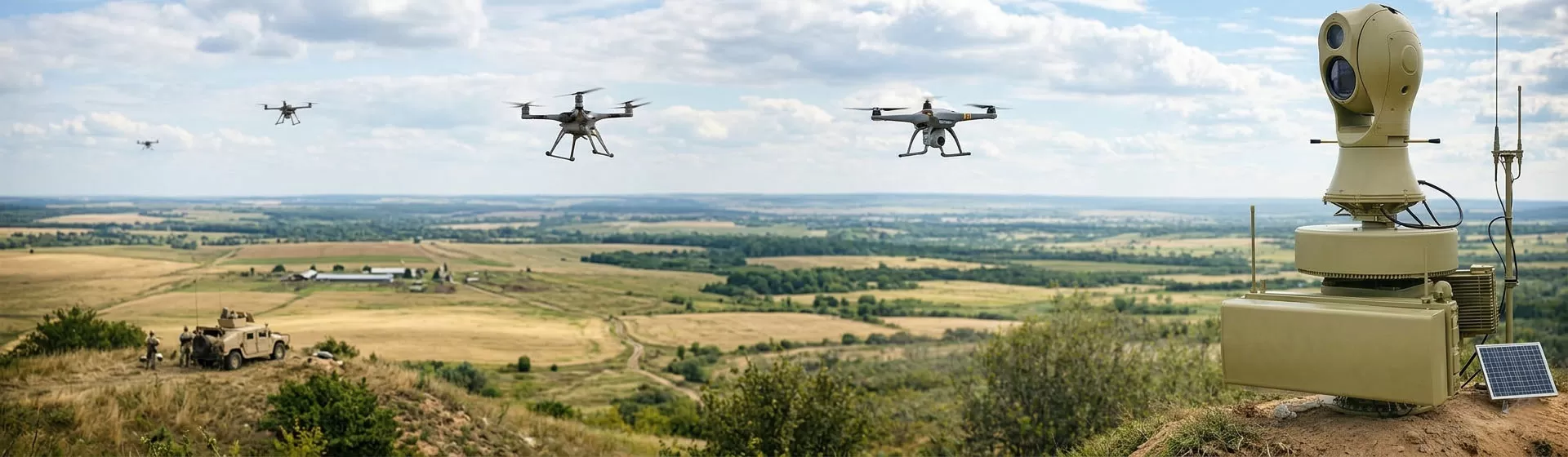
As unmanned aerial threats become more sophisticated and accessible, counter drone systems are evolving beyond traditional radar, electronic warfare, and ground-based air defense. One of the fastest-growing approaches is using drones to counter drones. By combining aerial surveillance, intelligent tracking, electronic attack, and physical interception, professional UAVs have become both airborne sentries and airborne interceptors in modern Counter-UAS (C-UAS) operations.
As a developer, manufacturer, and solution provider of professional drones and enterprise drones, HongKong Global Intelligence Technology Group Limited delivers advanced UAV platforms that support scalable Counter-UAS missions. From early detection to kinetic interception, the company provides customized drone solutions that help security forces, military organizations, and critical infrastructure operators respond rapidly to evolving low-altitude threats.
How Drones Strengthen Modern Counter-UAS Operations
An effective Counter-UAS mission follows four essential stages: Detect, Track, Identify, and Mitigate (DTI-M). While ground-based sensors remain critical, drones extend operational coverage into areas where conventional systems have limitations.
Airborne Patrol and Early Threat Detection
Ground radar and optical surveillance systems often struggle with obstacles such as urban buildings, forests, valleys, or mountainous terrain. Patrol drones overcome these blind spots by providing an elevated viewing angle, significantly improving situational awareness over low-altitude airspace.
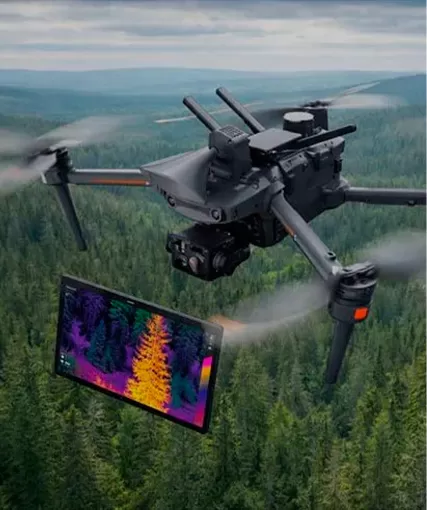
Equipped with high-resolution EO/IR cameras, drones can continuously monitor potential flight paths, verify suspicious aerial objects, and relay real-time intelligence to command centers. Once a hostile UAV is detected, the patrol platform can also retrace its flight path to help locate the remote pilot or launch position, supporting rapid source identification and coordinated response.
Airborne Electronic Countermeasures
Electronic warfare is one of the most effective non-destructive methods within modern counter drone systems. Instead of relying solely on fixed ground jamming equipment, airborne platforms carrying lightweight RF jammers or GPS spoofing modules can move directly toward the target and conduct highly directional interference at close range.
Operating much nearer to hostile drones greatly improves jamming effectiveness while minimizing unnecessary interference to surrounding communications. This mobile soft-kill capability provides flexible protection for military bases, border security, public events, airports, and critical infrastructure.
Physical Drone Interception
Hard-kill interception has become one of the most widely adopted Counter-UAS methods in operational environments. A dedicated interception drone physically neutralizes hostile UAVs using various engagement methods depending on mission requirements.
Interception options may include deploying capture nets to entangle hostile drones, carrying net recovery systems for controlled retrieval, or executing direct kinetic collisions against high-priority threats. Specialized military platforms may also integrate additional effectors for precision aerial engagement when mission rules permit. These approaches enable rapid neutralization without depending exclusively on expensive missile-based air defense systems.
Essential Capabilities for Counter-UAS Interception Drones
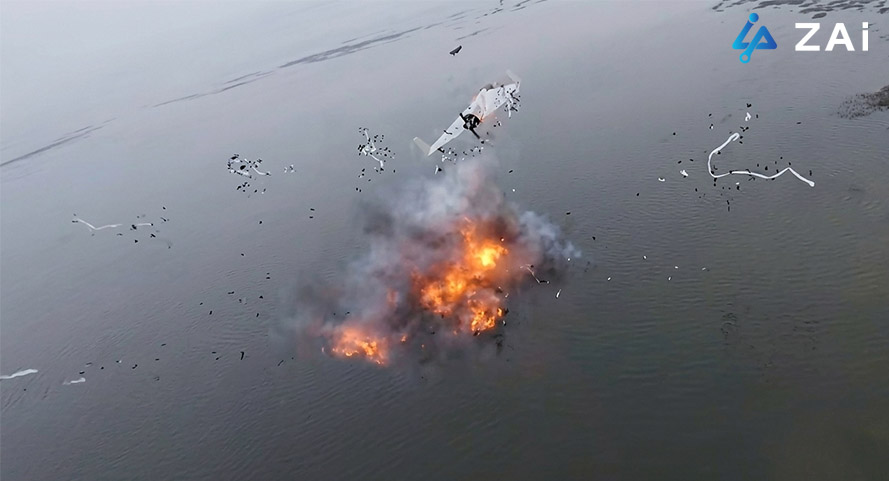
Successfully intercepting another drone requires far more than high speed. A modern interception drone functions as an integrated aerial defense platform capable of operating autonomously in highly contested environments.
High-Speed Flight Performance and Precision Guidance
Unlike a loitering munition, which prioritizes endurance while searching for targets, Counter-UAS interceptor drones focus on rapid acceleration, aggressive climb performance, and exceptional maneuverability. Their objective is to launch within seconds, quickly reach interception altitude, and engage fast-moving aerial threats before they reach protected areas.
Advanced guidance, navigation, and control (GNC) algorithms continuously calculate interception trajectories during high-speed flight while compensating for wind, target maneuvers, and changing environmental conditions. This enables accurate engagements against highly dynamic airborne targets.
Radar-to-Vision Target Handover
Since compact interceptor drones cannot carry large long-range radar systems, they rely on seamless integration with external surveillance assets.
Ground-based radar detects incoming targets and transmits their flight coordinates to the interceptor before launch. As the drone approaches the target area, onboard electro-optical and infrared cameras combined with AI-powered edge vision take over target tracking. This radar-to-vision transition enables highly accurate terminal guidance, even if electronic interference or evasive maneuvers reduce the accuracy of external tracking data.
GPS-Denied Autonomous Operations
Counter-UAS environments frequently involve heavy electronic warfare, including GPS jamming, spoofing, and communication disruption. Under these conditions, drones must continue operating without depending entirely on satellite navigation or constant operator control.
Autonomous navigation technologies such as inertial navigation systems (INS), visual inertial odometry (VIO), and onboard AI flight control allow interceptor platforms to maintain stable navigation, pursue assigned targets, and complete interception missions even after communication links have been degraded or lost.
Modular Payloads and Swarm Coordination
Different missions require different response methods. Modern interceptor platforms benefit from modular payload architectures that allow operators to quickly configure electronic jammers, capture nets, specialized interception devices, or other mission-specific payloads without changing the airframe.
When confronting coordinated drone swarm attacks, multiple interceptor drones can collaborate through intelligent swarm networking. By sharing target information in real time and automatically assigning engagement responsibilities, the swarm avoids duplicate interceptions and significantly improves defense efficiency against saturation attacks.
Customized Counter-UAS Drone Solutions
Every operational environment presents unique challenges, from protecting military installations and airports to safeguarding energy facilities, border zones, and critical infrastructure. Effective counter drone systems require seamless integration between surveillance sensors, command systems, electronic warfare assets, and airborne interception platforms.
HongKong Global Intelligence Technology Group Limited specializes in the research, development, manufacturing, and customization of professional drones and enterprise drones for advanced Counter-UAS operations. Whether your mission requires autonomous patrol drones, electronic warfare UAVs, high-speed interception drone platforms, or integrated multi-layer defense solutions, our engineering team can tailor a system to meet your operational requirements.
Contact our sales specialists to discuss your mission profile and develop a customized Counter-UAS drone solution designed for your specific operational environment.

 English
 français
 Deutsch
 русский
 فارسی
فارسی ไทย
ไทย العربية
 Nederland
 বাঙালি
 Македонија