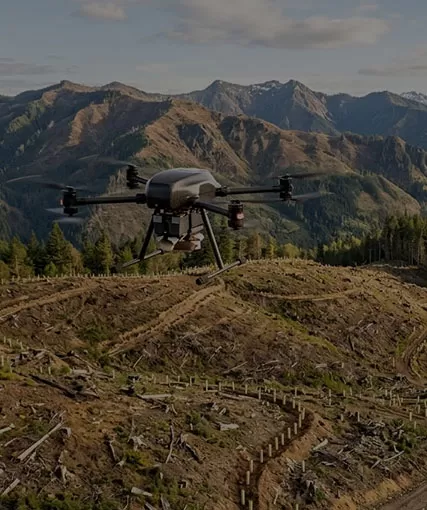
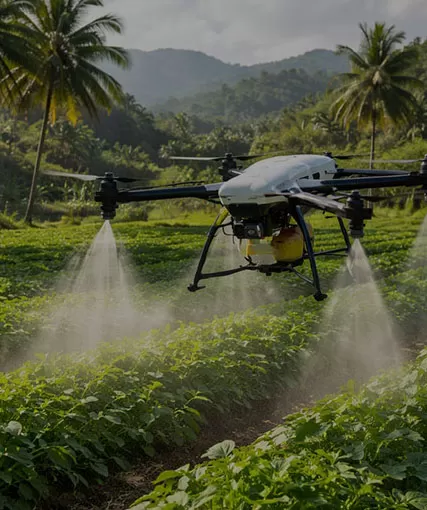
An industrial drone purchase should begin with the work that must be completed, not with a preferred aircraft shape or a headline specification. Buyers often compare flight time, payload, range, camera resolution, and price as if each number can be evaluated independently. In practice, these variables form one operating system. A heavier payload changes endurance, temperature affects battery output, wind affects power demand, data quality depends on the sensor and flight plan, and the best aircraft is still a poor investment when maintenance, training, software, or spare parts are missing.
This guide explains how project owners, distributors, engineering teams, public-service organizations, agricultural operators, inspection contractors, and industrial integrators can evaluate professional UAV platforms. It focuses on civilian and commercial missions such as surveying, inspection, mapping, agriculture, logistics, cleaning, emergency support, and environmental monitoring. The goal is to help you write a stronger requirement document, compare quotations on equal terms, and select a system that can complete repeatable missions rather than merely demonstrate an impressive test flight.
HongKong Global Intelligence Technology Group Limited develops and supplies ZAi drone systems for professional applications. The brand portfolio includes configurable multirotor and VTOL platforms, mission payload integration, deployment support, training, maintenance resources, and after-sales service. Throughout this guide, ZAi is used as an example of an application-driven manufacturer: the recommended approach is to define the operating scenario first and then configure the aircraft, payload, communications, software, and support package around that scenario.
An industrial drone is an unmanned aircraft system designed to perform repeatable professional tasks under defined operational, environmental, data, and safety requirements.
The word “drone” can describe everything from a small recreational aircraft to a heavy-lift platform carrying a specialized sensor or cargo module. The industrial distinction is not created by size alone. It comes from system-level capability. A professional platform must provide predictable flight behavior, documented payload compatibility, maintainable components, mission planning, data integrity, operational logging, and a support process that helps the customer keep the system available.
Industrial missions also demand more than a single aircraft. A complete system normally includes the airframe, propulsion, batteries or another power source, flight controller, navigation modules, command-and-control link, payload, ground station, software, chargers, spare parts, transport cases, documentation, and training. When a supplier quotes only the aircraft, the buyer may later discover that the real deployment cost is much higher because essential accessories, software licenses, payload mounts, data-processing tools, or replacement parts were excluded.
The FAA’s Part 107 framework in the United States covers many commercial operations involving unmanned aircraft weighing less than 55 pounds at takeoff. That limit includes attached equipment and payload. Standard operations also involve requirements such as visual line of sight and operating at or below 400 feet above ground level in common circumstances. Other countries use different categories and risk-assessment methods. Therefore, the regulatory pathway should be checked at the same time as the aircraft specification, especially for heavy systems, operations beyond visual line of sight, flights over people, or cargo routes.
For buyers comparing industrial drones, the most useful question is not “Which model is best?” It is “Which complete system can perform my mission with acceptable safety, data quality, turnaround time, and lifecycle cost?”
A mission definition is a written description of the task, environment, payload, route, output, personnel, and acceptance criteria that the drone system must satisfy.
A strong mission definition prevents specification drift. Without it, different departments may optimize for different outcomes: procurement focuses on purchase price, pilots focus on ease of flight, engineers focus on payload capacity, managers focus on productivity, and data teams focus on output quality. A mission definition brings these requirements into one document so suppliers can propose comparable solutions.
Begin with the physical task. State what the aircraft must inspect, carry, spray, map, monitor, clean, or deliver. Define the area, route length, height, terrain, access limitations, obstacle density, expected wind, temperature range, dust, moisture, electromagnetic conditions, and whether GNSS reception is reliable. A drone that performs well over an open field may not be suitable beside a steel structure, inside a plant, near power infrastructure, or around tall buildings where multipath and signal obstruction become important.
Next, define the output. A mapping project may require an orthomosaic, point cloud, digital elevation model, or volumetric calculation. An inspection project may require radiometric thermal images, zoom photography, defect coordinates, and a repeatable route for trend analysis. An agricultural project may require a target application rate, droplet size, swath consistency, or hectares completed per hour. A cargo project may require a secured payload, delivery confirmation, temperature monitoring, or a maximum door-to-door time.
Finally, define acceptance criteria. Useful criteria include mission completion rate, minimum reserve energy at landing, positional accuracy, image overlap, allowable data loss, maximum setup time, payload change time, wind limit, operating temperature, and the number of missions expected per day. These criteria allow a factory acceptance test and a site acceptance test to be designed before the purchase order is signed.
An airframe comparison evaluates how multirotor, fixed-wing, and vertical-takeoff-and-landing designs trade hover capability, range, efficiency, payload, launch space, and operational complexity.
| Platform Type | Primary Strength | Main Limitation | Typical Industrial Fit | Buyer Questions |
|---|---|---|---|---|
| Multirotor | Vertical takeoff, stable hover, precise low-speed positioning | Higher power consumption during continuous lift | Inspection, spraying, short-range cargo, cleaning, close observation | How does payload change endurance, and what wind reserve is available? |
| Fixed-wing | Efficient forward flight and wide-area coverage | Cannot normally hover and may need launch/recovery space | Large-area mapping, environmental surveys, corridor monitoring | What are the takeoff, landing, and recovery requirements? |
| Hybrid VTOL | Vertical launch combined with efficient cruise | More mechanical and software complexity | Long-range mapping, remote logistics, corridor inspection | How are transition reliability and emergency modes validated? |
| Tethered system | Long-duration power and persistent observation | Restricted movement and tether management | Persistent monitoring, communications relay, certain cleaning tasks | What happens after power interruption or tether tension change? |
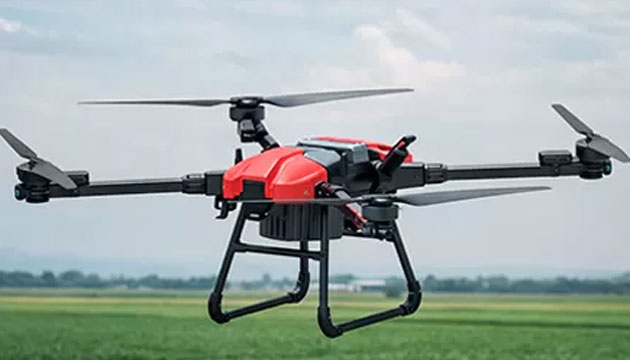
Multirotors are often selected when the aircraft must hover beside an asset, move slowly around a structure, carry a spray tank, lower a package, or maintain a precise position. Their lift is generated continuously by the rotors, so endurance falls quickly as takeoff weight rises. A product datasheet that lists maximum flight time without payload should not be used to estimate mission time with a heavy sensor or cargo module.
Fixed-wing aircraft are efficient when they can keep moving. They cover more ground with less energy because the wings generate lift in forward flight. However, they are not the default answer for every long route. Launch and recovery areas, turning radius, minimum speed, terrain, and the inability to hover may make them unsuitable for precise delivery or close inspection.
Hybrid VTOL platforms combine vertical launch with wing-borne cruise. They are attractive for remote sites where a runway is unavailable but route distance exceeds the practical range of a conventional multirotor. Buyers should ask for evidence of transition testing, lost-link behavior, emergency landing logic, and payload performance in both hover and cruise. Complexity is justified only when the mission benefits are measurable.
A drone payload is the mission-specific equipment or material carried by the aircraft, including sensors, cargo, release mechanisms, gimbals, pumps, tanks, cables, and mounting hardware.
Payload capacity is often misunderstood because the quoted number may not include the mount, wiring, gimbal, enclosure, release mechanism, or protective structure. Ask the supplier to state maximum payload, recommended operational payload, maximum takeoff weight, center-of-gravity envelope, and tested endurance at several payload points. The recommended operational payload is usually more useful than the theoretical maximum because it preserves control authority, wind tolerance, battery reserve, and component life.
For sensor payloads, mass is only one requirement. The aircraft must supply the correct voltage, current, connector, communication protocol, time synchronization, positioning data, and mechanical isolation. A high-resolution camera that cannot be synchronized with GNSS or stabilized correctly may produce poor mapping results. A thermal camera without radiometric data may be unsuitable when the buyer needs temperature measurement rather than visual contrast. A LiDAR system may require precise time stamping, an inertial measurement unit, and a post-processing workflow that is not included in the aircraft price.
For cargo payloads, define dimensions, center of gravity, sensitivity, fastening, release method, environmental protection, and delivery confirmation. A compact five-kilogram payload may be easier to carry than a long or flexible three-kilogram item. Liquid payloads create changing mass distribution and slosh. Suspended loads introduce pendulum motion. The integration must be evaluated as a complete flight configuration.
Request an interface control document for custom payloads. It should identify mechanical dimensions, fasteners, allowable loads, power, connectors, data protocols, software commands, center-of-gravity limits, and test procedures. This document reduces integration risk and makes future payload upgrades easier.
Mission endurance is the usable time or distance available after accounting for payload, weather, route, maneuvers, reserve energy, and operational contingencies.
Do not compare models using the longest flight-time number in a brochure. Ask for a test matrix showing aircraft weight, payload, battery, temperature, wind, altitude, flight mode, route profile, and landing reserve. A 45-minute unloaded hover test does not prove that the system can complete a 30-minute inspection with a thermal gimbal in wind. Similarly, a fixed-wing endurance figure measured in efficient cruise cannot be applied to repeated climbs, loitering, or VTOL transitions.
Build a mission cycle. Include preflight setup, takeoff, climb, outbound travel, work time, return travel, descent, landing, battery replacement, payload service, data transfer, and checks before the next launch. Productivity depends on the complete cycle, not only airborne time. A system with slightly shorter flight time but faster battery exchange, easier calibration, and simpler data transfer may complete more missions per day.
Use conservative reserves. The reserve should reflect the operating environment, not a marketing minimum. Wind may increase on the return leg, a landing area may become blocked, a payload release may fail, or the pilot may need to hold position. Determine a minimum landing state of charge and an alternate landing plan. Validate both in field tests.
For electric aircraft, battery health affects the result over time. Ask how the system records cycles, cell imbalance, temperature, internal resistance, and capacity loss. Confirm whether the quoted endurance is based on new batteries and how the operator should derate performance as batteries age. Battery storage, transport, charging infrastructure, fire safety, and replacement availability belong in the procurement calculation.
Navigation accuracy is the degree to which the aircraft and collected data can be positioned, repeated, and validated against the project’s required output.
Standard GNSS may be sufficient for visual inspection or general monitoring, but surveying, repeatable inspection, precision agriculture, and automated landing can require RTK, PPK, ground control points, visual positioning, terrain following, radar, or LiDAR-based navigation. These technologies solve different problems. RTK provides real-time corrections, while PPK applies corrections after the flight. Ground control points provide independent references for photogrammetric processing. Obstacle sensors help with local awareness but do not replace route planning or pilot responsibility.
The required accuracy should be stated in the language of the deliverable. “Centimeter-level accuracy” is too vague. Specify whether the requirement is relative or absolute, horizontal or vertical, at what confidence level, and how it will be checked. The U.S. Geological Survey reports an example in which drone maps produced with ground control points achieved horizontal resolutions of approximately 5 to 10 centimeters and vertical precision within 8 centimeters compared with independent RTK measurements. That is an application example, not a universal promise for every drone or project.
A buyer considering a land surveying drone should ask for sample deliverables, processing settings, checkpoint methodology, camera calibration, overlap recommendations, ground sampling distance, and accuracy reports. The aircraft, sensor, flight plan, ground control, processing software, and operator skill all contribute to the result.
Repeatability is equally important for inspection. When the same route, camera angle, distance, and exposure can be reproduced, analysts can compare changes over time. Ask whether missions can be saved, versioned, audited, and transferred between operators.
Environmental suitability is the verified ability of the complete drone configuration to operate within defined wind, temperature, moisture, dust, altitude, and electromagnetic conditions.
Industrial pages often use broad phrases such as “all-weather,” “extreme temperature,” or “high wind resistance.” These claims should be converted into model-specific limits and test conditions. Ask for maximum operating wind, gust limit, precipitation rating, ingress-protection evidence, temperature range, altitude derating, corrosion protection, and the effect of each condition on payload and endurance.
Temperature affects batteries, electronics, lubricants, sensors, and material behavior. Cold conditions can reduce available battery power and voltage stability. High temperatures can increase thermal stress and shorten component life. High altitude reduces air density, which changes propeller performance and lift margin. Humidity, salt spray, dust, and chemical exposure can affect connectors and motors. The correct question is not whether the drone “works in harsh environments,” but which configuration has been validated under conditions that match your site.
Electromagnetic compatibility deserves attention near power lines, substations, large motors, communications towers, and metal structures. Ask how the aircraft handles compass interference, GNSS degradation, link loss, and navigation inconsistency. Confirm whether alternate navigation modes are available and how the operator is warned before control quality becomes unsafe.
Require a documented operating envelope and a preflight decision process. The operating manual should explain when to continue, modify, or cancel a mission. A manufacturer should be willing to identify limitations. Transparent limitations are a sign of engineering maturity, not weakness.
The communications and software stack is the set of radio links, control protocols, applications, data services, security controls, and interfaces that connect the aircraft to operators and enterprise workflows.
Range claims are meaningful only when the frequency, antenna configuration, terrain, interference, legal power limits, data rate, and line-of-sight conditions are stated. Video range, command range, and telemetry range may differ. Ask how the system behaves when bandwidth falls, whether video quality adapts, what happens after lost link, and whether the return route remains safe.
For professional deployments, cybersecurity is part of availability and trust. Ask about user roles, password policy, encryption, firmware signing, update procedures, log retention, data storage location, cloud dependencies, offline operation, and vulnerability response. A customer operating critical infrastructure may require local data processing and controlled network access. A distributor may need fleet-level user management and remote diagnostics.
Integration should be evaluated before procurement. Determine whether the system exports standard image, geospatial, thermal, or telemetry formats. Ask whether an API or software development kit is available and what functions it exposes. Confirm ownership of collected data and whether subscriptions are required for mission planning, fleet management, or processing.
ZAi positions its industrial systems around configurable hardware and software integration. For a custom project, the buyer should request a scope that identifies supported protocols, payload commands, data fields, ground-station functions, update responsibilities, and acceptance tests. This protects both the customer and the manufacturer from assumptions that were never documented.
A supplier evaluation checklist is a structured review of engineering capability, quality evidence, documentation, service continuity, and commercial accountability.
Start by confirming the legal entity, factory role, manufacturing location, brand ownership, contact information, and the people responsible for engineering and after-sales support. A website may use the terms manufacturer, supplier, distributor, and trading company interchangeably. Ask which components are designed, manufactured, assembled, tested, and sourced by the supplier.
Review quality evidence. Certificates should be current, relevant, and traceable. Patents, test reports, compliance documents, and factory images should identify the entity and product where possible. Ask for serial-number control, incoming inspection, assembly checks, firmware version control, flight testing, payload testing, and final inspection records. For custom systems, define who approves changes and how configuration records are maintained.
Documentation is a core deliverable. The package may include operating manuals, maintenance schedules, wiring diagrams, interface documents, spare-parts lists, calibration instructions, safety procedures, battery guidance, and training materials. If documents are unavailable before purchase, post-delivery support is likely to be difficult.
Lifecycle support includes warranty terms, response time, remote diagnosis, repair process, firmware updates, replacement parts, battery availability, training, and technical escalation. ZAi’s current industrial pages describe a one-year warranty for applicable non-human quality issues and longer-term technical support, but buyers should confirm the final warranty, exclusions, lead times, and support channel in the contract for the selected model.
Ask for references or anonymized case information relevant to your mission. A supplier that has built an agricultural sprayer may still need additional engineering for a precision inspection payload. Similarity of application matters more than a generic statement about years of experience.
Total cost of ownership is the combined cost of acquisition, integration, training, operation, maintenance, downtime, software, compliance, and replacement over the planned service period.
The purchase price is only the first line. Add payloads, mounts, batteries, chargers, generators, transport cases, ground stations, software, processing computers, licenses, spare parts, training, certification, shipping, duties, insurance, maintenance, and site preparation. If the system requires a dedicated vehicle, landing pad, communications infrastructure, or climate-controlled battery room, include those costs.
Then estimate operating cost per completed mission, not cost per flight. A mission that must be repeated because data quality was poor is not successful. Include pilot and observer time, setup, travel, battery handling, processing, reporting, maintenance, and weather cancellations. For a mapping project, cost per square kilometer may be useful. For inspection, cost per asset or defect-quality dataset may be better. For agriculture, hectares completed at the required application quality matter more than theoretical coverage.
Downtime has a value. Ask for expected replacement-part lead time, recommended on-site spares, repair turnaround, and remote support availability. A lower-cost aircraft that waits six weeks for a motor or flight controller can be more expensive than a supported system with higher initial cost.
Use a three-year or mission-based model and test several scenarios. Include battery replacement and a contingency for component obsolescence. Compare the cost with the existing method, but also quantify safety, access, speed, data frequency, and the ability to inspect areas that were previously inaccessible. The best business case usually combines direct savings with improved information and reduced exposure of people to hazardous work.
Acceptance testing is a documented process that verifies the delivered configuration can meet agreed requirements before final approval and operational deployment.
A factory acceptance test should confirm the exact aircraft, firmware, payload, accessories, documentation, and spare parts included in the order. Test basic flight, payload operation, command link, failsafe modes, battery status, navigation, data capture, and configuration records. For custom integration, verify every interface listed in the control document.
Use representative payload mass and shape. A test with ballast may prove lift but not sensor operation, data quality, cargo stability, or electromagnetic compatibility. When possible, test the actual payload or an equivalent instrumented unit. Record conditions, aircraft weight, battery, flight duration, reserve, wind, temperature, and results. Video evidence is useful, but raw logs and data files provide stronger proof.
The site acceptance test validates the system in the buyer’s environment. It should include setup by the actual operating team, local communications conditions, terrain, obstacles, workflow, data processing, and the handoff to the customer’s reporting system. Define pass, conditional pass, and fail criteria before testing starts.
Training should be connected to acceptance. Operators need to demonstrate preflight checks, mission planning, emergency response, battery handling, payload operation, data transfer, and maintenance tasks. The goal is not simply to complete a flight with the supplier present. The goal is to prove that the customer’s team can operate the system safely and consistently after handover.
Application-based selection matches aircraft and payload characteristics to the physical workflow and measurable output of a specific industry task.
For inspection, prioritize stable close-range control, sensor quality, obstacle awareness, repeatable routes, and data traceability. A zoom camera can reduce the need to approach a structure, while a radiometric thermal payload supports temperature analysis. The best platform depends on the asset, stand-off distance, defect size, and electromagnetic environment.
For surveying and mapping, evaluate sensor calibration, RTK or PPK, flight planning, ground control, overlap, processing workflow, and validation. Wide-area projects may favor fixed-wing or VTOL efficiency, while smaller or complex sites may favor multirotor flexibility.
For agriculture, define whether the mission is spraying, spreading, seeding, scouting, or mapping. Tank capacity alone does not determine productivity. Flow rate, droplet control, swath, refill time, battery exchange, terrain following, obstacle avoidance, field shape, and local chemical-dispensing rules all matter. Buyers reviewing agriculture drones for sale should compare complete field cycles and local service support rather than maximum liters alone.
For cargo, define payload size, route, landing space, handling, security, delivery confirmation, weather, charging, and regulatory pathway. Multirotors are useful for precise short routes and hovering; VTOL systems can improve efficiency on longer corridors. For cleaning, define surface type, height, water source, pressure, tether management, runoff, wind, and safety exclusion zones.
For emergency and public-service missions, prioritize rapid deployment, thermal or zoom imaging, communications resilience, lighting, loudspeaker or delivery payloads, evidence logging, and clear procedures. In all applications, the system should be selected around mission success criteria and validated under realistic conditions.
An industrial drone request for quotation is a structured document that gives suppliers enough technical and commercial information to propose a complete, comparable system.
Organization and project: industry, country, operating entity, intended users, expected deployment date, and whether the purchase is a pilot or fleet program.
Mission: task, route, area, asset, target output, missions per day, and success criteria.
Payload: type, mass, dimensions, power, data interface, stabilization, release or mounting requirement, and whether the supplier must integrate it.
Environment: temperature, wind, altitude, rain, dust, humidity, salt, electromagnetic conditions, obstacles, GNSS availability, and launch/landing constraints.
Performance: operational payload, required work time, route distance, reserve, positioning accuracy, data quality, and turnaround time.
Compliance: destination-country requirements, registration, pilot qualifications, operational category, radio approvals, chemical-dispensing rules, and documentation needed for import or operation.
System package: aircraft quantity, batteries, chargers, payloads, ground stations, software, cases, spares, tools, manuals, training, warranty, and support.
Testing: factory acceptance, site acceptance, required logs, sample data, environmental test evidence, and pass/fail criteria.
Commercial terms: quotation validity, Incoterms, lead time, payment, packaging, shipping, warranty exclusions, repair process, spare-part pricing, and software fees.
A detailed RFQ reduces quotation revisions and discourages suppliers from presenting a low entry price that excludes essential components. It also allows ZAi or another manufacturer to recommend a configuration based on the mission rather than guessing from a general inquiry such as “send price for a long-range industrial drone.”
Industrial drone FAQs are concise answers to the procurement, performance, compliance, and support questions buyers commonly raise during platform evaluation.
An industrial drone is designed as a maintainable work system with mission payloads, documented interfaces, repeatable workflows, operational logging, support, and acceptance criteria. A consumer drone may provide excellent imaging or flight performance but may not support custom payloads, enterprise integration, field maintenance, or the environmental and data requirements of an industrial project.
Choose the payload capacity that supports the complete mission equipment with adequate control, endurance, wind tolerance, and reserve. Include the mount, gimbal, cables, release mechanism, enclosure, and accessories. Ask for tested endurance at your operational payload rather than selecting the largest theoretical payload number.
No. Flight time must be evaluated with the actual payload, route, weather, reserve, and work profile. Productivity also depends on setup, battery exchange, payload service, data transfer, maintenance, and mission success rate. A shorter but repeatable and well-supported mission cycle can deliver better output.
RTK or PPK is useful when the project requires precise georeferencing, repeatable routes, accurate mapping, or reduced dependence on ground control. It is not automatically required for every visual inspection or monitoring mission. Define the deliverable accuracy and validation method first, then select the positioning workflow.
Send the mission, payload, route, environment, required output, performance criteria, country of operation, expected quantity, acceptance tests, training needs, warranty expectations, and target deployment date. Photos, maps, payload drawings, and sample deliverables help the engineering team propose a realistic configuration.
Use a written factory acceptance test that identifies the exact configuration, firmware, payload, aircraft weight, conditions, flight profile, failsafe checks, data output, documentation, and pass criteria. Request raw logs and sample files. Follow with a site acceptance test in the actual operating environment.
An industrial drone buying conclusion is the final decision framework that connects mission requirements, evidence, lifecycle support, and operational risk.
Selecting an industrial drone is a system-engineering and operational decision. The aircraft, payload, communications, software, batteries, personnel, procedures, regulation, data workflow, maintenance, and support package must work together. A buyer who begins with a mission definition can compare suppliers more accurately, identify hidden costs, and design acceptance tests that prove real capability.
The most reliable procurement process follows a clear sequence: define the mission and output, select the appropriate airframe, integrate the complete payload, model endurance with reserve, verify navigation and data quality, confirm the operating environment, review compliance, calculate lifecycle cost, and validate the system through factory and site tests.
ZAi supports application-driven industrial drone projects through configurable platforms, payload integration, deployment guidance, training, maintenance resources, and after-sales service. A useful first conversation is based on your route, payload, environment, data requirement, and mission frequency. Those inputs allow the engineering team to recommend a system that is practical to operate and support over its lifecycle.
External references are authoritative sources used to verify regulatory, mapping, and risk-assessment information discussed in this guide.

 English
 français
 Deutsch
 русский
 فارسی
فارسی ไทย
ไทย العربية
 Nederland
 বাঙালি
 Македонија