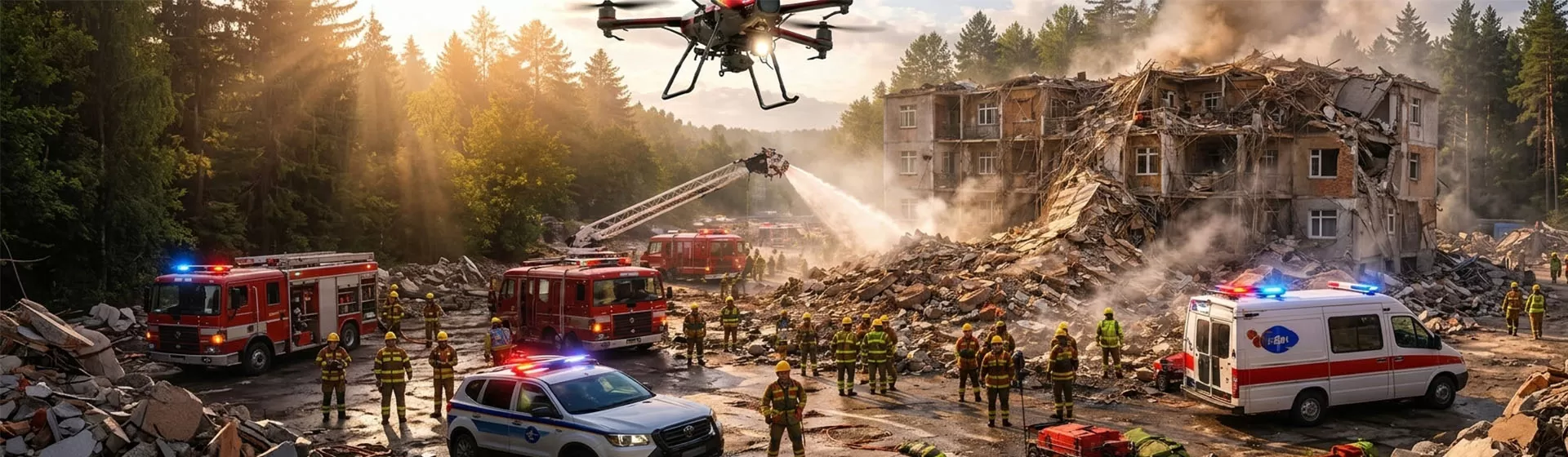
In emergency and disaster response operations, timely information is often the key to saving lives. Unmanned Aerial Vehicles (UAVs) have become an essential tool for emergency management agencies, rescue teams, fire departments, and public safety organizations by providing rapid aerial intelligence, expanding operational visibility, and reducing risks to personnel.
Unlike conventional ground-based response methods, drones can quickly access areas affected by collapsed infrastructure, flooding, fire, hazardous materials, or other dangerous conditions. Equipped with advanced sensors and mission-specific payloads, UAVs help responders assess situations faster, make informed decisions, and execute rescue operations more effectively.
Earthquake Response
Earthquakes often cause widespread structural damage, blocked transportation routes, and communication disruptions. Rapid assessment is critical during the first hours following a disaster.
3D Mapping and Damage Assessment
Drones equipped with LiDAR systems or high-resolution mapping cameras can rapidly generate detailed 3D terrain models and orthomosaic maps of affected areas. Emergency command centers can use this information to identify severely damaged structures, evaluate access routes, and prioritize rescue operations.
Survivor Detection
Thermal imaging cameras and life-detection sensors enable UAVs to locate potential survivors trapped beneath debris or isolated in inaccessible areas. These systems can identify heat signatures and detect subtle signs of human presence, supporting search-and-rescue teams during both day and night operations.
Emergency Communication Support
In regions where communication infrastructure has been damaged, tethered drones carrying temporary communication relay systems or mobile base stations can provide emergency network coverage, helping restore connectivity between responders and affected communities.
Wildfire and Urban Fire Response
Fire environments are highly dynamic and often pose significant risks to firefighters. Drones provide real-time intelligence while minimizing exposure to dangerous conditions.
Thermal Monitoring Through Smoke
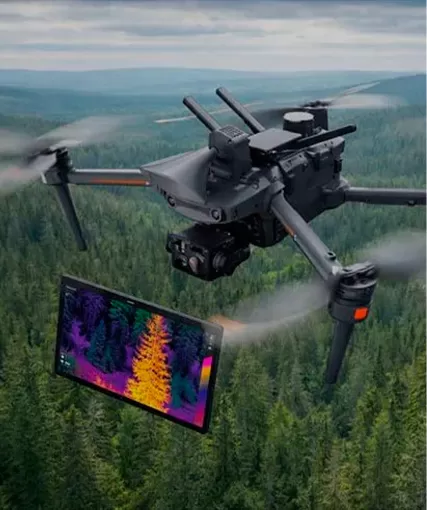
Dual-sensor UAVs combining visible-light and thermal imaging cameras can penetrate smoke and identify fire hotspots, active fire fronts, and hidden sources of reignition. Real-time thermal data enables incident commanders to monitor fire progression and allocate resources more effectively.
Fire Suppression Support
Heavy-lift drone platforms can carry fire suppression payloads, fire-extinguishing projectiles, or specialized equipment for high-rise firefighting operations. These systems can assist in reaching elevated or difficult-to-access locations where traditional firefighting methods may be limited.
Operational Safety Monitoring
Continuous aerial surveillance provides firefighters with a comprehensive view of fire behavior, helping teams identify hazards, evacuation routes, and changing environmental conditions.
Flood and Typhoon Response
and severe storms frequently isolate communities and create significant challenges for rescue and supply delivery operations.
Emergency Supply Delivery
Payload-drop and cargo drones can transport essential supplies directly to stranded individuals or isolated communities. Emergency equipment such as life jackets, drinking water, medical kits, communication devices, and food supplies can be delivered with precision even when roads are inaccessible.
Wide-Area Search and Rescue
UAVs equipped with wide-angle cameras and AI-assisted image recognition technology can rapidly scan large flooded areas to identify stranded individuals, emergency signals, or potential rescue targets. This significantly improves search efficiency and response speed.
Real-Time Flood Monitoring
Drones provide updated aerial imagery of flood extent, damaged infrastructure, and water flow patterns, supporting decision-making for evacuation planning and resource deployment.
Landslide and Geological Disaster Monitoring
Landslides, mudslides, and slope failures can occur with little warning and often present ongoing risks after the initial event.
Slope Stability Monitoring
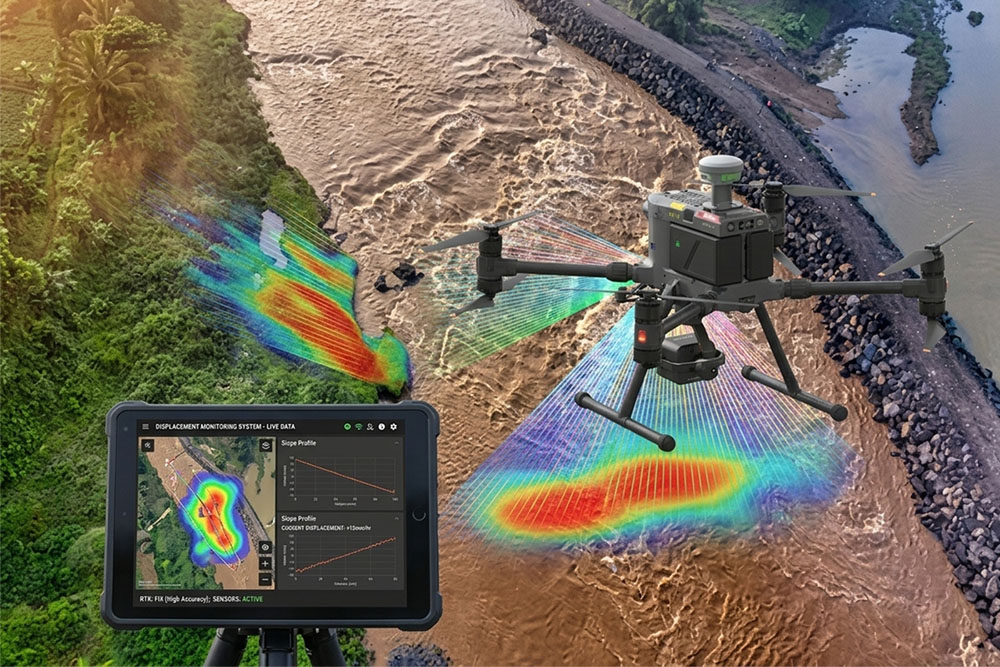
Drones equipped with RTK positioning systems and LiDAR sensors can perform high-precision terrain surveys and collect repeatable measurement data. By comparing survey results over time, authorities can detect ground movement and identify potential secondary landslide risks before they become critical.
Safety Assessment Before Deployment
Before rescue personnel enter hazardous zones, geological monitoring & rescue mapping Drones can conduct remote inspections to evaluate terrain conditions, structural stability, and potential dangers. This helps reduce risks to first responders and improves operational planning.
Hazardous Materials and Radiation Incidents
Chemical leaks, toxic gas releases, and radiation emergencies often involve environments that are unsafe for human entry.
Remote Environmental Monitoring
drones equipped with gas detection sensors can measure concentrations of combustible, toxic, or hazardous substances directly within affected areas. Real-time data allows emergency teams to establish safety perimeters and implement appropriate response measures.
Radiation Detection and Assessment
For nuclear or radiological incidents, UAVs carrying radiation monitoring equipment can safely enter restricted zones and transmit radiation readings back to command centers. This enables responders to evaluate risks and develop response strategies without exposing personnel to unnecessary danger.
Reduced Human Exposure
By collecting environmental data remotely, drones help minimize direct human exposure to hazardous conditions while accelerating incident assessment and decision-making.
Building a Comprehensive Disaster Response Drone Ecosystem
Different disaster scenarios require different aerial capabilities. A comprehensive emergency response program often combines multiple drone platforms and payloads to address diverse operational requirements.
Disaster Scenario
Recommended Drone Capabilities
Operational Benefits
Earthquakes
Thermal imaging, LiDAR mapping, communication relay payloads
Gas detection sensors, radiation monitoring equipment
Remote inspection, personnel safety protection
Customized Solutions for Your Mission Requirements
Every emergency response organization faces unique operational challenges, regulatory requirements, and environmental conditions. HongKong Global Intelligence Technology Group Limited provides customized drone solutions tailored to specific mission profiles, payload requirements, and deployment scenarios.
Whether you require aerial mapping capabilities, thermal search-and-rescue systems, communication relay platforms, cargo delivery drones, or specialized hazardous-environment inspection solutions, our team can help design an integrated UAV system that meets your operational objectives.
Contact our sales specialists today to discuss your application requirements and develop a customized drone solution for your emergency and disaster response operations.
Technical Consultation & Project Requirements
Share your mission specifications—such as payload capacity, endurance needs, or environmental constraints. Our engineering team will review your data and provide a optimized UAV configuration tailored to your industrial workflow.
HongKong Global Intelligence Technology Group Limited

 English
 français
 Deutsch
 русский
 فارسی
فارسی ไทย
ไทย العربية
 Nederland
 বাঙালি
 Македонија