Drone Applications for Site Safety in Mining and Quarries
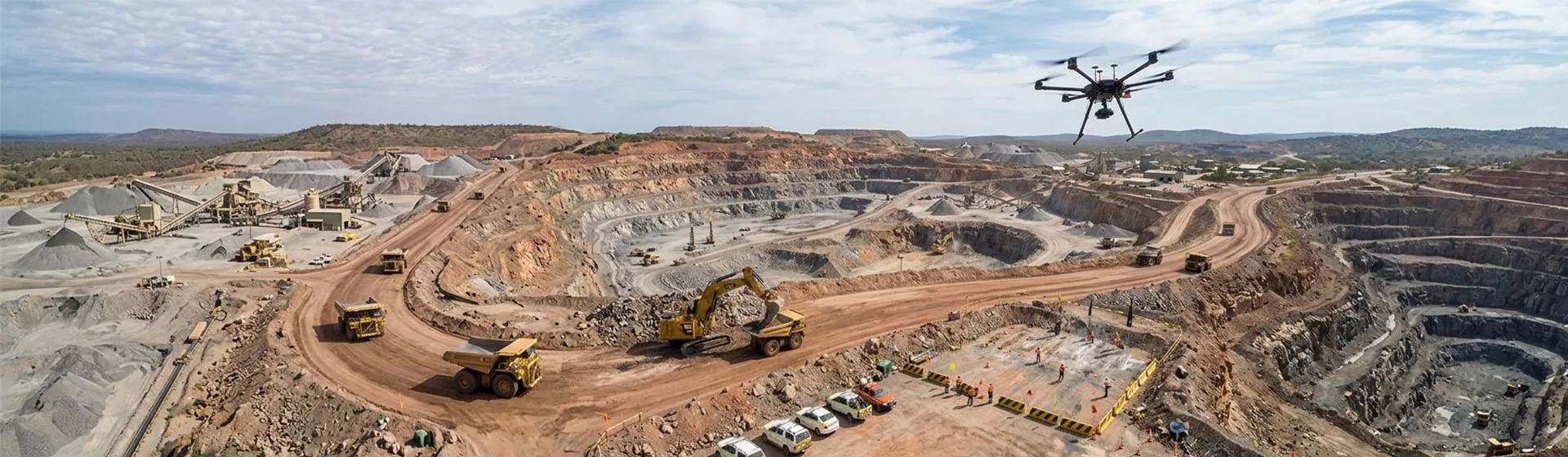
Mining and quarry operations are among the most demanding industrial environments in the world. Steep slopes, unstable terrain, heavy machinery, blasting activities, and constantly changing work zones create significant safety challenges for operators and site managers. Traditional inspections often require personnel to enter hazardous areas, consume valuable time, and still leave critical blind spots uncovered.
Today, mining drones are transforming how site safety is managed. Far beyond aerial photography, modern UAV platforms have become intelligent inspection tools capable of delivering real-time situational awareness, automated safety monitoring, and high-precision digital documentation. By combining advanced sensors, AI-powered analytics, and autonomous flight capabilities, drones help mining companies reduce risks, improve compliance, and build safer working environments without disrupting production.
How Mining Drones Improve Site Safety
Unlike manual inspections that rely heavily on human observation, drones provide a comprehensive aerial perspective of the entire operation. They can safely reach dangerous or inaccessible locations while continuously collecting high-quality visual and spatial data.
UAV Inspection of High-Risk Mining Areas
Many of the most dangerous inspection tasks occur in locations where human access is difficult or unsafe. Industrial drones can quickly inspect:
Highwalls and pit slopes for signs of instability
Haul roads affected by erosion or subsidence
Conveyor systems and elevated structures
Crushers, stockpiles, and processing facilities
Blast zones before and after detonation
Tailings storage facilities and retaining structures
Instead of exposing inspectors to falling rocks, unstable ground, or operating equipment, UAVs complete these inspections remotely while transmitting live video back to safety managers.
Because drones can operate from multiple viewing angles, they reveal hazards that are impossible to identify from ground level.
Drone-Based Safety Compliance Patrols
Routine safety inspections are essential, but manually monitoring a large mining or quarry site requires significant labor and time. Autonomous UAV patrols provide a more efficient alternative.
Using pre-programmed flight routes, drones can regularly inspect active work areas to verify whether personnel are complying with site safety regulations.
Typical observations include:
Proper use of helmets and high-visibility clothing
Correct use of fall protection equipment
Unauthorized access into restricted zones
Unsafe working positions near heavy equipment
Obstructed emergency access routes
Rather than replacing safety officers, drones provide them with a broader operational view, allowing them to focus on resolving issues instead of spending hours walking the site.
UAV Security Patrols and Perimeter Protection
Large mines and quarries often cover hundreds of hectares, making perimeter security difficult, especially at night.
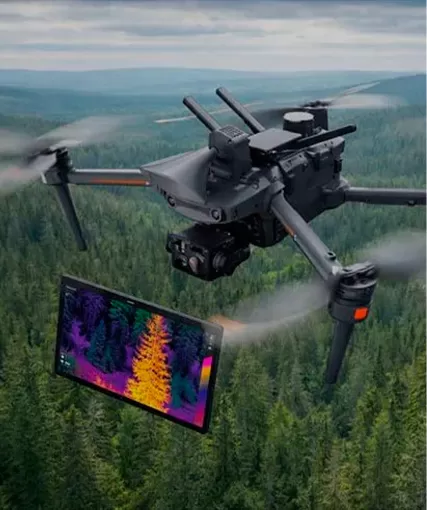
Drones equipped with thermal imaging cameras and intelligent tracking technology can automatically patrol site boundaries, detecting unauthorized vehicles or personnel before they enter hazardous operating zones.
Night-time aerial patrols significantly improve security while reducing the need for continuous ground patrols across remote locations.
Drone Monitoring for Environmental and Emergency Risks
Mining sites face environmental hazards that require immediate attention.
Depending on operational requirements, UAVs can carry specialized payloads capable of detecting:
Heat anomalies indicating fire risks
Equipment overheating
Hazardous gas leaks
Dust accumulation
Flooded work areas after heavy rainfall
Landslides or ground movement
Earthquake or storm damage
When accidents occur, drones can rapidly assess the situation from the air, stream live video to emergency teams, illuminate accident scenes with onboard searchlights, and carry loudspeakers to coordinate evacuations without exposing additional personnel to danger.
Why UAV Technology Matters for Mining Site Safety
The greatest value of drone technology lies not only in collecting aerial imagery but also in fundamentally improving how safety management is performed.
Reducing Human Exposure to Dangerous Tasks
The most immediate benefit is removing personnel from high-risk environments.
Instead of climbing unstable slopes, entering excavation pits, or inspecting elevated structures, inspectors can perform assessments remotely using real-time drone imagery. This significantly lowers the likelihood of workplace injuries while allowing inspections to continue safely under challenging conditions.
Faster Inspections with Complete Site Coverage
Large mining operations can require several hours—or even an entire day—for manual safety inspections.
Autonomous drones can survey the same area within minutes while covering locations that would otherwise remain hidden from ground-based inspections. The result is more frequent inspections, improved consistency, and faster identification of developing hazards.
Digital Documentation and Long-Term Risk Analysis
Every drone flight creates a permanent digital record.
Captured imagery can be processed into high-resolution orthomosaic maps, digital elevation models, and accurate 3D site reconstructions. By comparing historical datasets over time, safety managers can identify subtle changes such as slope deformation, structural movement, or ground subsidence long before they become visible to the human eye.
These digital records also support regulatory compliance, incident investigations, and long-term operational planning.
Essential Features of Industrial Drone Systems for Mining
Not every UAV is designed for demanding industrial environments. Effective mining safety operations require professional hardware combined with intelligent software.
Advanced UAV Hardware for Industrial Safety Operations
Professional industrial drones should include several essential capabilities:
RTK centimeter-level positioning ensures highly accurate navigation around complex infrastructure, steel structures, and confined operating areas.
Omnidirectional obstacle avoidance enables safe flight around cranes, conveyors, stockpiles, and constantly changing construction environments.
Terrain-following flight automatically maintains a consistent altitude over uneven mine surfaces, steep quarry walls, and rugged landscapes.
Modular payload systems allow operators to quickly switch between mission-specific equipment, including:
High-powered optical zoom cameras for detailed inspections
Thermal imaging sensors for fire prevention and night operations
Searchlights for low-light missions
Loudspeakers for emergency communication
Additional industrial sensors when required
This flexibility enables one drone platform to perform multiple safety tasks throughout the day.
AI Drone Software for Intelligent Safety Management
Hardware captures the data, but intelligent software transforms that information into actionable insights.
Modern AI-powered drone platforms can automatically recognize:
Missing safety helmets
Missing reflective safety vests
Personnel entering restricted areas
Smoke or open flames
Unsafe worker behavior
Abnormal thermal hotspots
Instead of requiring operators to manually review every video frame, AI immediately flags potential violations and sends alerts to safety personnel for rapid response.
Autonomous UAV Operations and Drone Dock Integration
Continuous site monitoring becomes even more effective when drones operate autonomously.
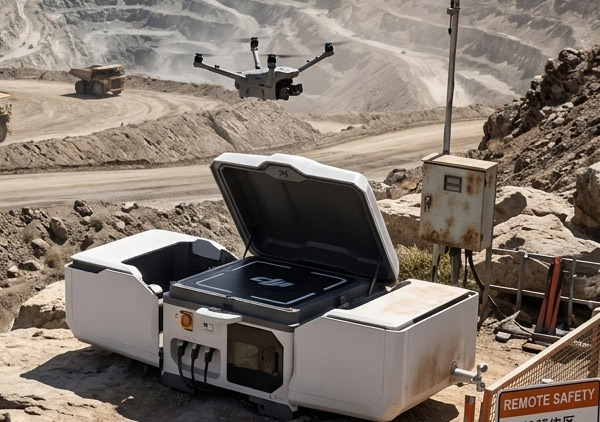
Integrated drone docking stations allow UAVs to launch automatically according to scheduled inspection plans, complete predefined flight missions, return for battery charging, upload collected data, and prepare for the next patrol without human intervention.
For large mining operations, this creates a truly continuous safety monitoring system capable of operating throughout the day with minimal manpower.
Smarter Site Safety with Professional Mining Drone Solutions
As mining operations continue to expand in scale and complexity, drone technology is becoming an essential component of modern safety management. From high-risk inspections and automated compliance monitoring to emergency response and AI-powered hazard detection, mining drones provide safer, faster, and more reliable situational awareness than traditional inspection methods.
HongKong Global Intelligence Technology Group Limited specializes in professional UAV solutions for demanding industrial applications. Whether your operation requires autonomous inspection systems, AI-enabled safety monitoring, RTK mapping, thermal imaging, or fully customized drone workflows, our engineering team can tailor a complete solution to match your operational environment, safety objectives, and project requirements. Contact our specialists to discuss a customized drone solution designed specifically for your mining or quarry site.

 English
 français
 Deutsch
 русский
 فارسی
فارسی ไทย
ไทย العربية
 Nederland
 বাঙালি
 Македонија