The wildfire crisis that escalated on December 6, 2025, across New South Wales in Australia—forcing evacuations in densely populated coastal communities such as Phegans Bay and Woy Woy—served as yet another warning that traditional wildfire management models are reaching their limits. Thousands of hectares burned within days, driven by a volatile combination of prolonged drought, extreme heat, and erratic winds. Yet beyond these environmental factors lies a more uncomfortable truth: many of the worst outcomes were amplified by delayed detection, constrained resources, and fragmented early response.
Wildfires today move faster, burn hotter, and spread more unpredictably than in previous decades. Relying primarily on ground patrols, manned aircraft, and post-ignition response is no longer sufficient. To keep pace with this new reality, emergency authorities must transition from a reactive posture to a prevention-first strategy—one that emphasizes early detection, rapid intelligence, and immediate intervention. Industrial-grade drones, purpose-built for demanding operational environments, are emerging as a critical enabler of this shift.
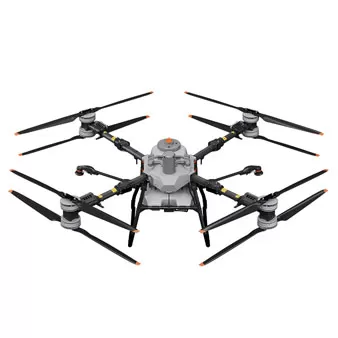
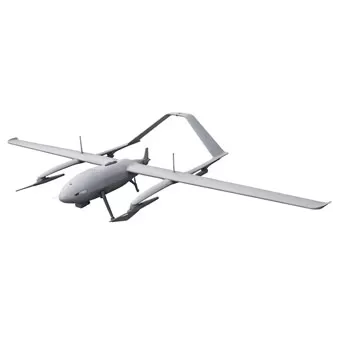
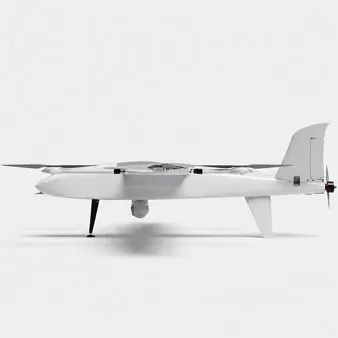
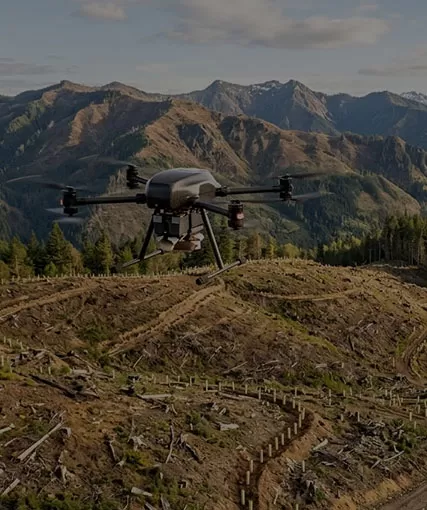
Conventional firefighting assets are effective once fully mobilized, but they are inherently constrained by deployment time, cost, and human risk. Industrial firefighting drones address these constraints by offering speed, persistence, and precision at a fraction of the operational burden. Unlike hobby-grade UAVs, these platforms are engineered for high winds, long endurance, heavy payloads, and real-time data transmission—capabilities that are essential in wildfire scenarios.
By integrating industrial drones into wildfire workflows, authorities can compress the time between ignition and suppression, often turning what would have become a large-scale disaster into a contained incident. This is not a future concept; it is a practical, deployable solution available today.
The first and most critical failure point in wildfire response is detection. Fires that smolder unnoticed for even 20–30 minutes can escalate beyond the reach of initial attack crews, especially in remote bushland or rugged coastal terrain. FPV (First-Person View) industrial inspection drones directly address this vulnerability.
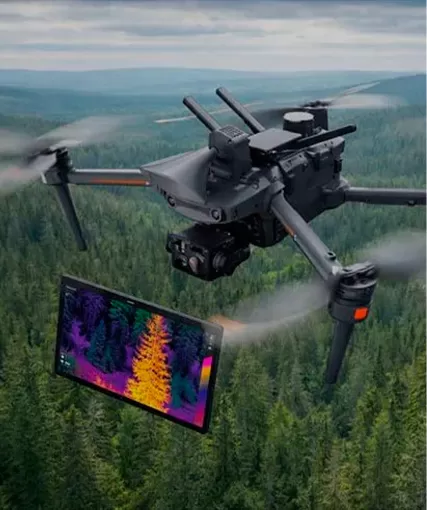
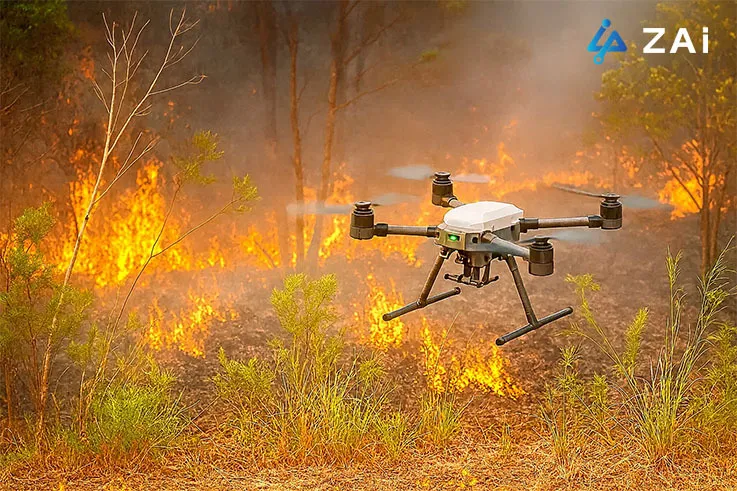
Equipped with high-resolution optical cameras and thermal imaging sensors, FPV drones can be launched within minutes of an alert—or even as part of routine patrols in high-risk seasons. From the operator's perspective, the drone becomes an extension of human vision, navigating valleys, cliff lines, and dense vegetation where ground access is limited or dangerous.
Industrial platforms such as the ZAi Drone are designed for stability in turbulent air and sustained flight over wide areas. Their thermal payloads can detect subtle heat anomalies beneath tree canopies, along power corridors, or near rocky outcrops—areas where sparks often ignite unnoticed. This capability enables authorities to identify potential threats hours earlier than traditional reporting methods.
Detection alone is not enough. What sets industrial inspection drones apart is the quality and immediacy of the intelligence they provide. Live video feeds, georeferenced thermal data, and wind-condition observations allow command centers to:
Confirm ignition points with precision
Map fire perimeters in real time
Assess rate of spread and direction under current wind conditions
Allocate resources based on verified risk, not assumptions
This data-driven approach buys firefighting teams the most valuable asset in a wildfire: time.
Once a hotspot is identified, the window for effective intervention is narrow. Industrial fire suppression drones are designed to exploit this window by delivering immediate, localized suppression before flames escalate. Unlike large aerial tankers, which require coordination, airspace clearance, and significant lead time, drones can be dispatched instantly from nearby staging points.
These systems are particularly effective in the early stages of ignition, when fires are still small, isolated, and highly responsive to targeted suppression.
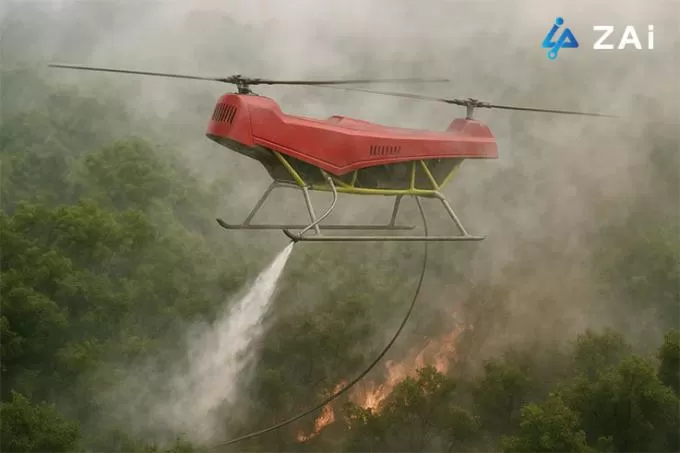
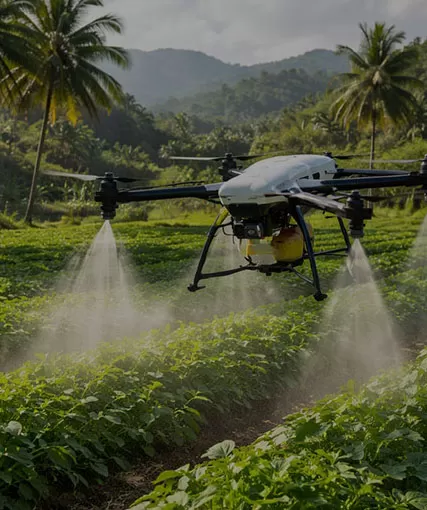
One of the most practical applications of fire suppression drones is precision liquid delivery. Equipped with compact water or fire-retardant tanks, drones can perform controlled drops directly onto hotspots, smoldering vegetation, or flare-ups along containment lines. This method minimizes waste, avoids collateral environmental impact, and focuses suppression exactly where it is needed.
For fires near infrastructure, residential edges, or environmentally sensitive zones, this level of accuracy is impossible to achieve with traditional aircraft.
In steep cliffs, ravines, or dense bush where liquid drops are less effective, drones can deploy specialized fire-extinguishing bombs. These devices are designed to disperse suppression agents that rapidly cool the combustion zone and displace oxygen, neutralizing flames in confined or inaccessible pockets.
Used strategically, this approach can stop spot fires that would otherwise breach containment lines and reignite larger fronts.
Every wildfire response carries inherent danger, particularly during initial attack in unstable conditions. By sending drones instead of personnel into high-risk zones, agencies significantly reduce exposure to falling trees, sudden wind shifts, and rapidly changing fire behavior. This not only protects lives but also preserves workforce capacity during prolonged fire seasons.
Manned aircraft and ground crews are finite resources, often stretched thin during regional emergencies. Industrial drones are comparatively low-cost, easily scalable, and can be operated in coordinated fleets. This allows authorities to monitor multiple ignition points simultaneously and prioritize response based on real-time threat assessment.
Perhaps the most important advantage is strategic. By embedding industrial drones into routine patrols, infrastructure inspections, and extreme-weather readiness plans, wildfire management shifts from reaction to prevention. Small fires are detected early, suppressed immediately, and documented thoroughly—reducing the likelihood of catastrophic escalation.
Australia's wildfire environment is unlikely to become more forgiving. Climate trends suggest longer fire seasons and more extreme conditions ahead. In this context, incremental improvements to legacy systems are not enough. What is required is a structural upgrade in how risk is identified and addressed.
Industrial firefighting drones provide that upgrade. They connect early detection with rapid suppression, intelligence with action, and prevention with resilience. By adopting these systems at scale, emergency services can ensure that future wildfire seasons are defined not by reaction and loss, but by preparedness, precision, and control.
The path forward is clear: fires that are found early and suppressed decisively remain small. Industrial drones make that outcome achievable.