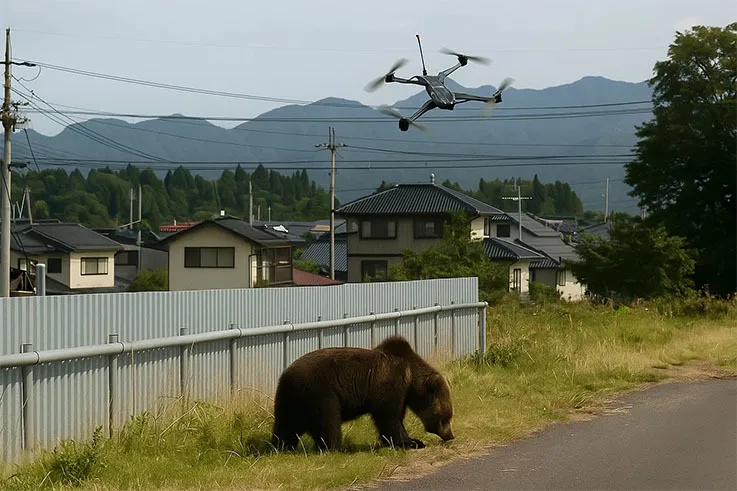
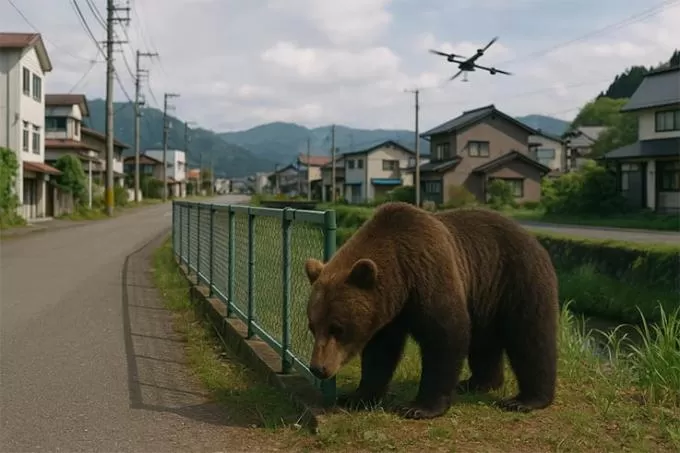
It began as a trickle of reports—isolated bear sightings near mountain villages, fleeting shadows caught on roadside cameras. But as the autumn chill deepened, those reports turned into tragedy. By early November, 13 people had been killed since April 2025 across Japan, marking one of the deadliest years on record for bear-related incidents. From Akita to Toyama, what once felt like distant wilderness has crept unsettlingly close to everyday life.
Farmers now work in pairs. Schoolchildren carry bells on their backpacks. Even city edges echo with cautionary announcements reminding residents to stay alert. What was once a rare and awe-filled encounter with nature has become a public safety emergency testing the limits of traditional wildlife control.
The statistics alone are haunting—but what they truly represent is a shift in the fragile balance between humans and the wild. Japan, a nation celebrated for its coexistence with nature, now finds itself confronting a question few ever imagined:
How do we defend ourselves without destroying what we seek to protect?
Conventional defenses—traps, fences, ground patrols, and culling—once kept wildlife at bay. But today's bears are different. Biologists note that as winters grow shorter and food sources dwindle, bears enter hyperphagia, a desperate feeding frenzy before hibernation. They follow the scent of crops, garbage, and livestock into towns and neighborhoods, no longer deterred by human presence or boundaries.
Traps catch too few. Patrols arrive too late. And lethal measures, though sometimes necessary, provoke public outcry and fail to address the root cause—an ecological imbalance colliding with human safety. The problem has evolved, but the tools have not.
Even the bravest local volunteers hesitate to patrol dense forests at dawn or dusk—the exact hours when bears are most active. The danger is not only physical; it's emotional, psychological, and cultural. What was once a symbol of Japan's northern wilderness is now a creature of fear.
It's clear this crisis demands something beyond human endurance—a guardian that doesn't tire, fear, or falter under threat.
That guardian may already be taking flight. Across several Japanese prefectures, drones are emerging as a new line of defense, patrolling the skies with sharp eyes and calm precision. In Gifu Prefecture, authorities have begun using drones equipped with loudspeakers to emit barking sounds and fireworks—non-lethal cues proven to drive bears back into the forest.
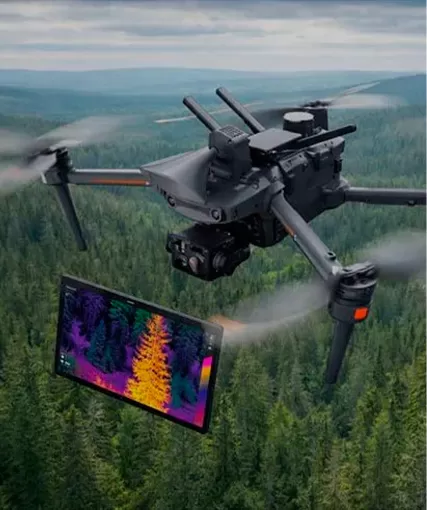
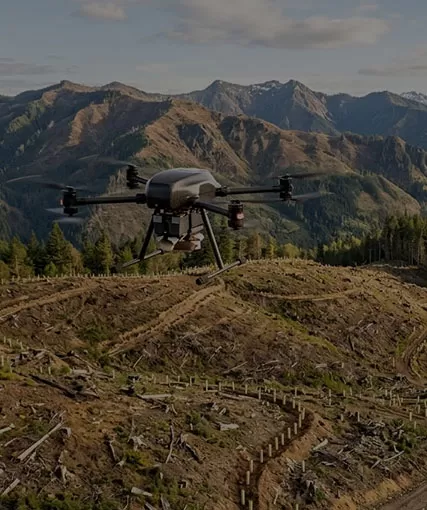
Unlike traditional patrols, these “Aerial Guardians” can cover vast areas, navigate rugged mountain terrain, and observe from above without risking human safety. Outfitted with high-zoom cameras and thermal imaging payloads, they provide early warnings long before a bear steps foot near a home or field.
More importantly, drones offer what no human patrol can: consistency. They don't depend on daylight, manpower, or proximity. They react instantly, adapt to any terrain, and collect data that can shape smarter, long-term wildlife management.
These machines mark the start of a new era—where technology, empathy, and foresight converge in the skies.
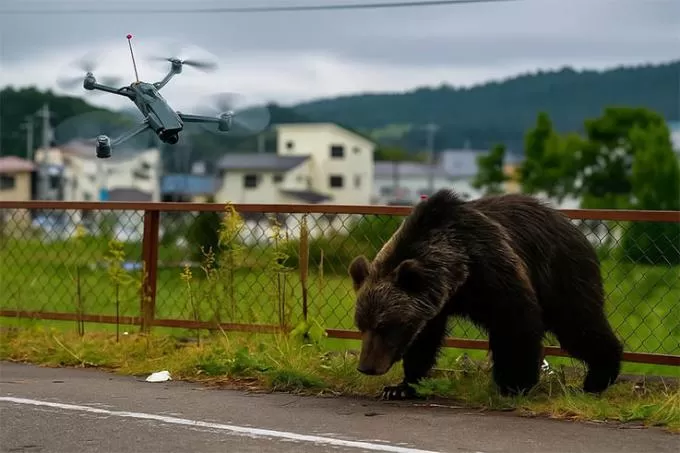
As Japan searches for ways to outpace this rising danger, one truth becomes clear: visibility means survival. To protect both people and wildlife, guardians must see beyond fog, darkness, and distance. This is where technology takes flight.
From the quiet hum of a drone over farmland to the glowing imagery captured by a thermal drone in the dead of night, these “eyes in the sky” redefine safety in the wild.
When morning mist clears and sunlight touches the valleys, camera drones rise as watchful sentinels. Equipped with high-magnification optical zoom, they scan forest edges and rural paths, identifying wildlife from hundreds of meters away—without intrusion or risk.
Each verified sighting provides timestamped evidence that helps authorities track patterns and coordinate responses. For communities living between civilization and wilderness, these drones bring reassurance and real-time awareness where once there was only guesswork.
When darkness settles, thermal drones continue the watch. Guided by infrared sensors, they detect heat signatures through fog, trees, or snow—revealing every hidden movement. This 24-hour vigilance turns night from a time of fear into a time of foresight, ensuring patrol teams can act before danger reaches the village edge.
Rain, wind, and snow once halted patrols—but dual-sensor drones have changed that. By combining visual and thermal imaging, they provide layered, reliable data in any condition. For operators, that means clarity; for residents, it means comfort. These drones don't just patrol—they bridge trust between humans and technology, guarding life from above in all seasons.
Seeing danger is only half the battle. Preventing it—without harm—is the next frontier. Japan's new drone strategies focus not on domination, but coexistence, powered by AI intelligence and non-lethal deterrence.
In prefectures like Toyama and Akita, AI-powered systems now analyze industrial drone footage in real time—recognizing a bear's size, movement, and behavior within seconds. This automation means patrols respond faster and with greater accuracy, freeing human teams from endless screen-watching and fatigue.
Each detection strengthens a learning network that grows smarter with every mission—a living defense grid built on foresight rather than reaction.
Once a bear is found, drones equipped with directional loudspeakers emit controlled deterrence—barking sounds or firecracker pops that trigger natural retreat instincts. Research in Japan and Montana shows this method is far more humane and effective than random noise or culling.
By delivering deterrence precisely where needed—at the right distance, at the right time—these drones teach boundaries without bloodshed, protecting lives while respecting wildlife.
Each patrol flight carries a moral weight: that protection should never mean destruction. Every time a drone guides a bear safely back to the forest, it restores the fragile harmony between humanity and nature. In this sense, the “Aerial Guardian” is more than a machine—it's a symbol of empathy powered by innovation.
In real crises, endurance means little without agility and speed. The true value of a drone lies not in how long it can fly, but in how effectively it performs when every second counts.
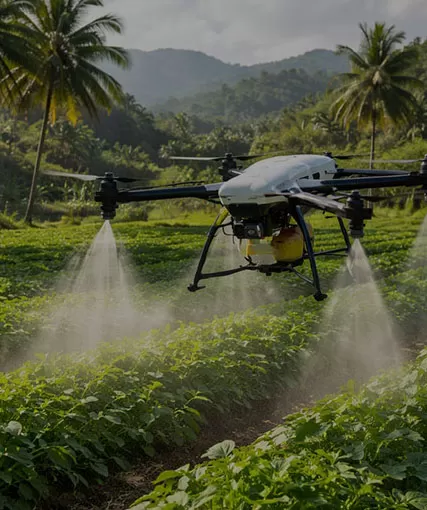
Japan's rugged terrain demands flexibility. Multi-rotor drones can hover, pivot, and descend into narrow valleys—making them ideal for fast response. Unlike fixed-wing drones that need large takeoff areas, multi-rotors launch from small clearings or vehicle beds, arriving first when urgency matters most.
A 30–40 minute flight might sound short, but in practice it's high-efficiency endurance. Teams can conduct several missions an hour, swapping batteries quickly to maintain continuous coverage. The goal isn't to fly endlessly—it's to act decisively and return safely, ready for the next sortie.
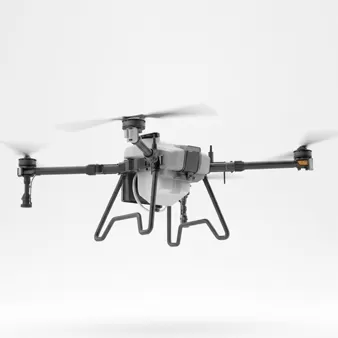
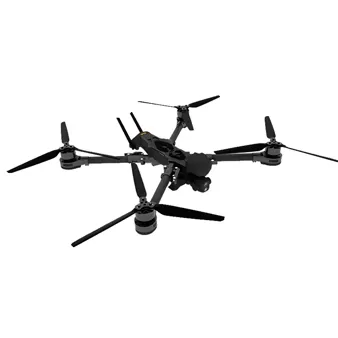
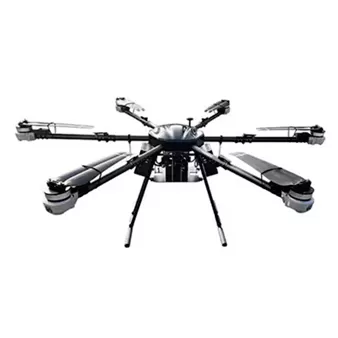
Among the pioneers of this frontier, ZAi drones by HongKong Global Intelligence Technology Group stand as field-tested leaders. Engineered for dense terrain and harsh weather, these modular UAVs integrate high-zoom cameras, dual-sensor payloads, and rapid-swap power systems—tailored to real patrol demands.
What sets ZAi apart is its mission-specific engineering: designed with direct input from security teams, environmental experts, and local authorities. Every feature exists for one purpose—to deliver precision, reliability, and adaptability where it matters most.
ZAi FPV Thermal Drone
In the shadow of Japan's bear attacks, one truth becomes undeniable: this is not merely a story of danger—it's a story of evolution. As wildlife adapts to survive, so must humanity adapt to protect. The future of wilderness safety is not walking through the forest—it's flying above it.
These all-weather, high-zoom, and AI-enabled drones prove that progress and compassion can share the same sky. They detect danger early, respond wisely, and help humans coexist with the creatures that share their homeland.
Every flight is an act of balance—a defense of life without the taking of it.
The lesson from Japan's crisis is universal: resilience begins with readiness. Across the globe, communities face similar risks—from predators to natural disasters. The demand for reliable, intelligent, all-weather drones has never been greater. What matters now is how we use these tools—to act quickly, wisely, and humanely.
ZAi drones embody this philosophy. Built for clarity, endurance, and compassion, they have proven themselves in some of the world's toughest environments. Each model is tailored to mission reality—whether safeguarding villages, monitoring wildlife, or reinforcing emergency response.
Through precision optics, AI detection, and weatherproof resilience, ZAi drones of HongKong Global Intelligence Technology Group redefine what it means to be a guardian in the modern world.
And as Japan reimagines its relationship with the wild, one message rises above the treetops:
The future of safety will not walk—it will fly.